


Pezeshkian says Iran ready to reopen Strait of Hormuz, allow UN nuclear inspections
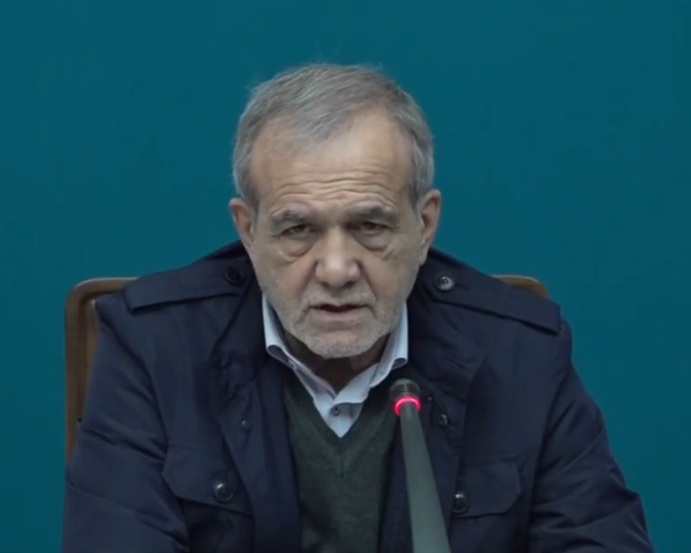
New York, Sep 26 (UNI) Iranian President Masoud Pezeshkian has said Tehran is prepared to reopen the Strait of Hormuz and allow United Nations nuclear inspectors into Iran as part of a proposal aimed at restarting negotiations with the United States over its nuclear programme.
In an interview with CBS News' Face the Nation, Pezeshkian said Iran would "abide by whatever we commit to" if Washington accepts Tehran's latest proposal to reopen the strategic waterway and resume nuclear talks. Iranian Foreign Minister Abbas Araghchi proposed this week that the Strait of Hormuz could be reopened after seven days, with negotiations with the US restarted as an initial step toward a broader nuclear agreement.
Washington has yet to respond to the proposal, announced on the sidelines of the UN General Assembly in New York. Pezeshkian asserted that a direct meeting with US President Donald Trump would be difficult because of the existing "atmosphere of distrust" between the two countries. "As long as they don't cease doing what they're imposing on us every day, it's difficult to trust them," he said. "Every day, they increase the sanctions against us. Every day, they threaten us. Every day, they strike us. And they don't honor what they have put in writing. So if they engage in talks, will they actually follow through?"
Trump had expressed openness to meeting Iranian officials during his New York visit, but no direct meeting took place. The two sides instead held indirect contacts through mediators. Pezeshkian said that his country wanted to return to the memorandum of understanding agreed with the United States in June, days after saying his country would not bend to Washington. He welcomed China saying it wanted the agreement to be revived, posting on X that "Iran shares this approach and underscores the importance of returning to that understanding".
There had been optimism that talks might be revived during the UN General Assembly this week, but in a defiant speech to the world body on Wednesday, Pezeshkian said Iran would not "bend at the knee" to the US. A day later he told Fox News that Iran did "not wish to continue" the war but it was up to Washington to end it. Meanwhile, Abbas Araghchi took part in a meeting with US envoy Steve Witkoff and presidential son-in-law Jared Kushner on the sidelines of the General Assembly, but their talks did not immediately yield a breakthrough.
During his address to the UN General Assembly, Trump said he had a "big decision to make" on whether to reach a deal with Iran or "annihilate" the country, while predicting that an agreement would not be reached until after the US midterm elections. Asked when Tehran expected a response to its proposal on the Strait of Hormuz, Pezeshkian said negotiations could begin immediately after Washington accepts it.
"If this message reaches the president of the United States, or the interviewers and those involved in the discussions, naturally the process will begin from the very day they accept it," he said. The Strait of Hormuz, through which a significant share of the world's oil supplies passes, has become a major point of contention between Tehran and Washington. The US has insisted that Iran should not control waterways entering the strait, including routes passing through Omani territory, or impose tolls on shipping. Iran, meanwhile, has demanded that vessels obtain permission and use an Iranian-approved shipping route.
Pezeshkian said Iran would comply with the framework agreed previously by the two sides. "If they operate according to that framework, I think all of us will abide by it," he said. The proposed arrangement follows the collapse in July of a 60-day ceasefire, or memorandum of understanding, which had been intended to create space for US-Iran negotiations on Tehran's nuclear programme. Iran has significantly expanded its uranium enrichment programme in recent years, including enrichment to levels close to weapons-grade purity.
Tehran denies seeking nuclear weapons but maintains that it has the right to enrich uranium for peaceful purposes. Trump has demanded that Iran abandon uranium enrichment altogether, taking a harder line than the 2015 nuclear agreement negotiated under former President Barack Obama, which permitted limited enrichment under restrictions and international monitoring. Pezeshkian, however, said Iran was now prepared to allow UN nuclear inspectors into the country.
"That is absolutely correct," he said when asked whether Iran would permit nuclear inspections. Pressed again on whether inspectors from the International Atomic Energy Agency (IAEA) would be allowed access, Pezeshkian repeated: "That is absolutely correct." He added that Iran could reach "accords and agreements" on inspections during negotiations if the IAEA sought access. At the same time, Pezeshkian reiterated that Iran does not seek to develop nuclear weapons, saying, "Developing nuclear weapons is haram" -- forbidden under Islam.
Turning to Iran's new Supreme Leader Mojtaba Khamenei, Pezeshkian rejected concerns about his health. Mojtaba Khamenei has remained largely out of public view since the US-Israeli attack that killed his father and former Supreme Leader Ayatollah Ali Khamenei earlier this year. Pezeshkian also informed that he had met Mojtaba Khamenei twice, including once for more than seven hours, and insisted that he had "no specific ongoing health issues or challenges."
"From a medical standpoint, he's completely healthy," Pezeshkian said, adding that injuries to his face and legs had recovered. "Hear this from me as a physician, and accept it.
UNI AAB


