


'We wanted to push boundaries of exploration': Col Ranveer Singh Jamwal on historic Ladakh feat
Parwinder Sandhu
New Delhi, Sept 28 (UNI) Indian mountaineering is on a new high going places in Ladakh where nobody had ever been before. It is no figment of the imagination that Indian mountaineers could summit 20 unclimbed peaks above 6,000 metres in just 23 days without compromising on safety.
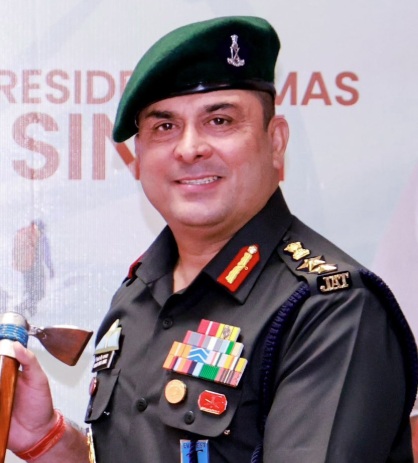
In an exclusive interview with UNI, Col Ranveer Singh Jamwal, Director of the National Institute of Mountaineering and Adventure Sports (NIMAS), Dirang, Arunachal Pradesh, said the First Ascent Mountaineering Expedition had scripted history by accomplishing what he described as the first-ever recorded summiting of 20 unclimbed peaks above 6,000 metres in a single expedition.
"We wanted to prove that Indian mountaineers can push the boundaries of exploration and achieve what was once considered impossible," Col Jamwal said, describing the achievement of summiting 20 unclimbed peaks above 6,000 metres in Ladakh in just 23 days. Col Jamwal described the expedition as one of the most challenging undertakings of his mountaineering career spanning over 23 years, saying the team had to overcome uncharted terrain, difficult weather, accumulated fatigue and logistical challenges while ensuring that safety remained paramount.
"The biggest challenge was the fact that we were attempting 20 different peaks, all above 6,000 metres and all of them were unclimbed. On a normal expedition, you have some information about the route from previous teams. Here, we had to study the terrain, decide our approach and make decisions on the mountain itself," he said. With little recovery time between summits, maintaining the team's energy, discipline and safety over 23 consecutive days was particularly demanding. "We never allowed the record to become more important than the safety of our team," Col Jamwal said.
The expedition's objectives were selected after a systematic study of maps, satellite imagery and existing mountaineering records to identify peaks with no recorded ascents. The team also conducted ground reconnaissance and assessed accessibility, altitude, terrain and technical challenges before finalising the objectives, including consultations with the Indian Mountaineering Foundation regarding the unclimbed status of the peaks. Unlike conventional expeditions, the mission involved 20 separate first ascents across widely dispersed locations, requiring continuous route assessment, logistics management and careful planning.
"I have undertaken many expeditions over the years, including Mt Everest three times, Mt Kangchenjunga and many difficult 7,000-metre mountains, but here we were attempting 20 separate first ascents, all above 6,000 metres, within a very short period and that too… miles apart from each other," he said. Among the most demanding climbs was Peak No. 6, at 6,285 metres, where the team encountered multiple false summits before finally reaching the top after nearly eight hours. Snowfall during the final stretch raised concerns about whether the summit could be achieved. "I did wonder whether we would be able to make it to the top but the team stayed together and we eventually reached the summit," he said.
The final summit, Peak No. 20, at 6,198 metres, presented a different challenge. Approaching the snow-clad mountain, the climbers had to fix nearly 800 metres of rope along a steep ice wall. The ascent took around seven hours, testing the team's endurance after 19 successful first ascents. "After 19 first ascents, when we were already physically exhausted, we had to find the energy for one more. Reaching that final summit was therefore a very special moment for the entire team," Col Jamwal said. The expedition also required changes to its original schedule.
Snowfall forced the team to postpone its first summit attempt, scheduled for August 10, to August 12, while flooding at Gyama Nala had washed away the approach track to several planned peaks. Instead of persisting with the original plan, the team climbed two peaks in the sector before moving to another phase, where reserve objectives had been identified. "For me, this is what expedition leadership is about… having a plan but also having the flexibility and judgement to change it when the mountain or conditions demand it.
The summit can wait, the safety of the team cannot," he said. Recalling the moment the team reached its 20th summit, Col Jamwal said relief came before celebration, as the climbers were physically exhausted. "For me, there was also a very personal realisation. It had taken me almost nine years of mountaineering to complete 20 significant peaks. And here we were, standing on our 20th summit in just 23 days. That thought was quite overwhelming," he said. Looking ahead, he said he hoped to continue exploring unexplored mountains while creating opportunities for young Indians to experience adventure sports.
"My message to young Indians would be very simple: choose fitness, choose adventure and choose purpose," he said, urging youngsters to take up activities such as trekking, cycling and climbing. "You don't have to start by dreaming of Everest or a 6,000-metre peak. Start somewhere, start small, train properly, stay consistent and keep moving forward," he said.
UNI PWS NST CDS


