


India joins global push for multilateralism as António Costa launches 'Partners for Multilateralism' initiative
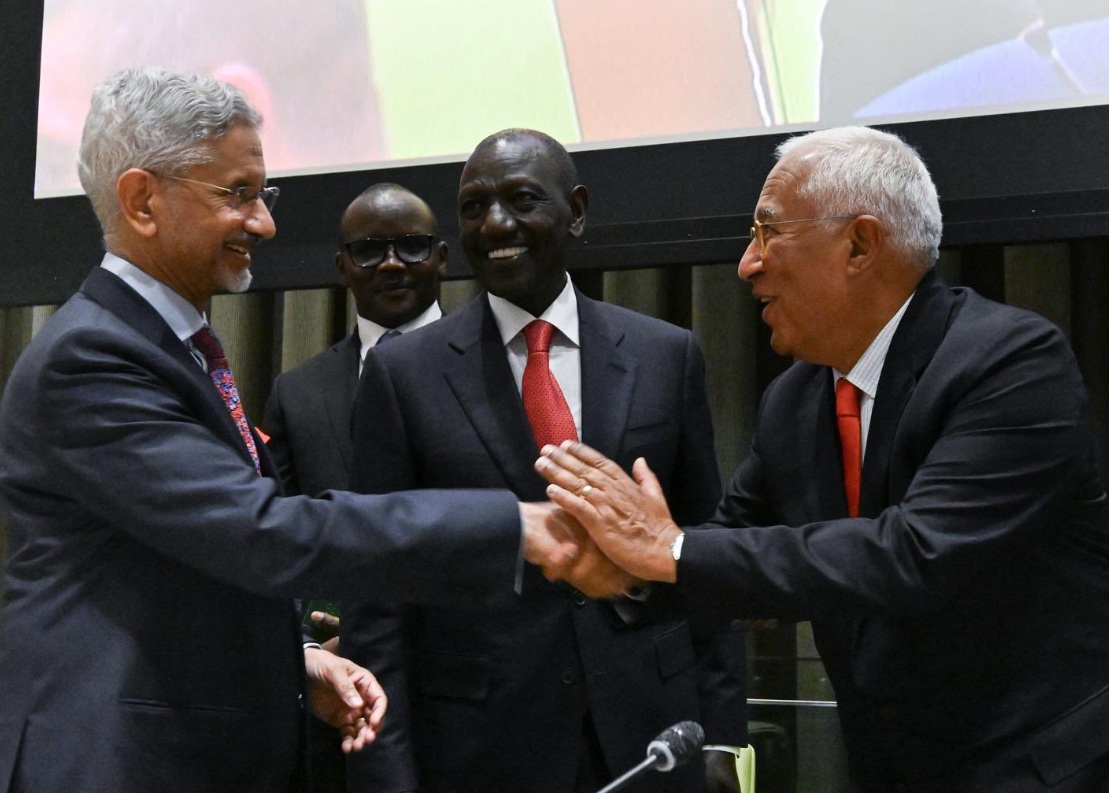
New York, Sep 22 (UNI) India has joined Australia, Barbados, Brazil, Canada, the European union and Kenya as an initial co-sponsor of the Partners for Multilateralism (P4M), a new international platform aimed at strengthening cooperation, international law, peace and sustainable development amid growing global tensions.
The initiative was launched on the sidelines of the UN General Assembly High-Level Week, bringing together countries committed to strengthening international cooperation and addressing shared global challenges. European Council President António Costa said that international law, effective institutions and international cooperation were essential for achieving lasting peace and prosperity.
Costa said the initiative would bring together countries committed to the principles of the United Nations Charter and to finding practical solutions to common global challenges. The P4M initiative seeks to reinforce multilateralism and promote cooperation among countries at a time of growing geopolitical tensions and complex global challenges. The participating countries have expressed their commitment to working together to support international law, peace, sustainable development and effective multilateral institutions.
"Partners for Multilateralism #P4M will be an open platform bringing together partners from across the world who are ready to uphold the common principles enshrined in the UN Charter and work towards concrete solutions." Costa said the initiative would provide a platform for dialogue and cooperation, with the United Nations remaining at its centre. "It will serve as a global network for dialogue, coalition-building and practical cooperation, helping us coordinate our response to shared challenges, with the UN at its core."
He also underlined the broad range of global issues the partnership intends to address, including climate change, sustainable development, global health and artificial intelligence. "Together, we can make progress in addressing global challenges such as the climate emergency, sustainable development, pandemic preparedness, economic resilience and artificial intelligence." India is listed among the initial co-sponsors of the P4M Declaration, alongside Australia, Barbados, Brazil, Canada, the European union and Kenya.
The declaration comes against the backdrop of what the participating countries describe as a period of "profound global transformation", marked by growing geopolitical tensions, conflict, economic pressures and emerging global challenges. The signatories expressed concern over "growing polarisation, the spread of conflict, violations of international law and the increasing resort to power politics, protectionism, coercion and the threat or use of force." The declaration argues that these trends are placing pressure on international peace and security and making stronger multilateral cooperation increasingly necessary.
The participating countries reaffirmed the central role of the United Nations and the rules-based international system. "We reaffirm that the multilateral system founded on the United Nations Charter remains indispensable." The declaration also calls for reform of the multilateral system to make it "more effective, representative, inclusive and fit for purpose." The signatories reaffirmed their commitment to international law and to principles including sovereign equality, territorial integrity, the peaceful settlement of disputes and the prohibition of the threat or use of force.
They also stressed the importance of international humanitarian law, the Universal Declaration of Human Rights and the protection of human rights and fundamental freedoms. The P4M declaration identifies a broad agenda for international cooperation, including the climate emergency, biodiversity loss, pollution, artificial intelligence, global health, economic resilience and sustainable development. The countries also reaffirmed support for major international frameworks, including the Paris Agreement and the 2030 Agenda for Sustainable Development. The declaration highlights growing inequality as another challenge to stability and inclusive growth, while supporting international efforts including the Global Alliance Against Hunger and Poverty and the International Panel on Inequality. The signatories also called for stronger international economic cooperation, including "fair, open, resilient, predictable and inclusive economic cooperation."
The declaration supports more diversified global supply chains, reform of the multilateral trading system, improvements to the international financial architecture and greater coordination on international finance, digital transformation, artificial intelligence, climate change and global health. The countries further committed to working together to strengthen multilateral institutions, particularly the United Nations, including through initiatives such as UN80. The P4M declaration concludes with a call for sustained international engagement and practical cooperation among countries from all regions.
"Today, at a time of global transformation and mounting pressure on the international order, we choose cooperation, respect for international law, multilateralism and shared responsibility as the foundations of our collective efforts." With India among the initiative's initial co-sponsors, the Partners for Multilateralism platform seeks to build a wider network for dialogue, coordination and practical cooperation while placing the United Nations Charter, international law and multilateralism at the centre of its approach.
UNI AAB


