


Bombay HC bans firecrackers on public streets, orders strict curbs on festive noise across Maharashtra
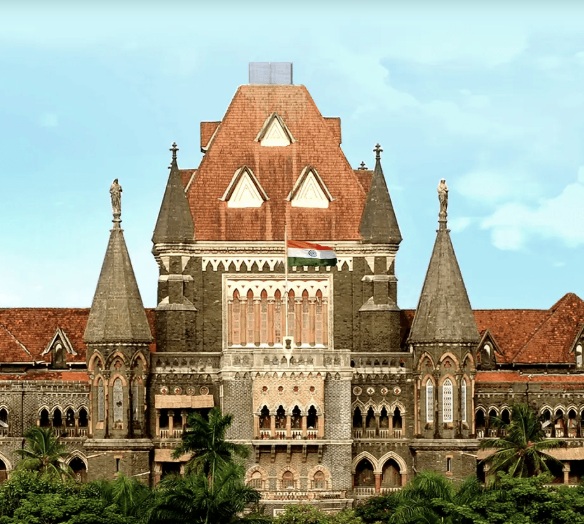
Mumbai, Sept 23 (UNI) The Bombay High Court has ordered a total ban on firecrackers on public roads during festivals and directed the Maharashtra government and police to take stringent measures to control noise and air pollution during processions and celebrations.
A division bench of Justices Girish S Kulkarni and Neela K Gokhale passed the directions on Tuesday while hearing a suo motu Public Interest Litigation concerning excessive noise from loudspeakers, amplified music systems and firecrackers during Ganeshotsav and other festivals. The court also prohibited the use of laser lights, high-intensity lumen lights and beams during festive celebrations, while directing authorities to ensure strict compliance with the prescribed noise limits. The bench said the ban on firecrackers on public streets was necessary in view of concerns over air pollution, toxicity and the risk of accidents on roads used by pedestrians and vehicles.
It also observed that the use of firecrackers on public roads remained an area requiring stricter regulation. The court made it clear that the restrictions were not intended to prevent religious processions or festivities, but to ensure that celebrations did not infringe upon the rights of other citizens. The High Court directed organisers seeking permission for processions and festive programmes to install visible decibel-measuring meters at venues and during processions. Sound systems are also required to have internal sound limiters, with organisers expected to ensure that permissible noise levels are not exceeded. Authorities have further been directed to monitor and record noise levels and take immediate action against unauthorised or illegal sound systems.
Where violations are detected, the offending equipment or instruments can be seized and confiscated. The court also directed authorities to consider security deposits as a condition for granting permission under the Noise Pollution Rules. A deposit of at least Rs 1 lakh may be taken from groups or associations and Rs 50,000 from individuals, with the amount liable to be forfeited in case of violations of prescribed noise limits.
The court said permissions granted to organisers should be displayed publicly along with the names, addresses and mobile numbers of persons responsible for the event, so that accountability can be fixed in case of violations.Police and civic officials have also been directed to sensitise organisers at the beginning of processions about their legal obligations and the need to maintain permissible decibel levels. The bench further stressed that authorities must consider the cumulative impact of noise when several processions or programmes are permitted in the same locality. Permissions should not be granted without considering the combined effect of the noise generated by multiple events.
The court also directed that the order be circulated to the concerned authorities across Maharashtra for immediate implementation during the festive period.The bench observed that existing noise pollution rules could not be treated as suspended merely because festivals were being celebrated. It called for preventive enforcement rather than action only after complaints were received. During the proceedings, the court had also taken note of restrictions imposed by police authorities in cities such as Nagpur and Solapur and questioned why similar preventive measures could not be implemented uniformly across Maharashtra.
The court said violations could attract action under the Noise Pollution Rules, the Environment (Protection) Act, the Explosives Act, the Bharatiya Nyaya Sanhita and other applicable laws.The High Court's directions came amid the ongoing Ganeshotsav celebrations, when large processions and public gatherings are being held across Maharashtra. The court reiterated that festive celebrations can continue, but must be conducted within the legal framework and without causing excessive noise, air pollution or inconvenience to the wider public.
UNI AAA CDS


