


Rajnath Singh calls for 'Aatmanirbharta 2.0' in defence
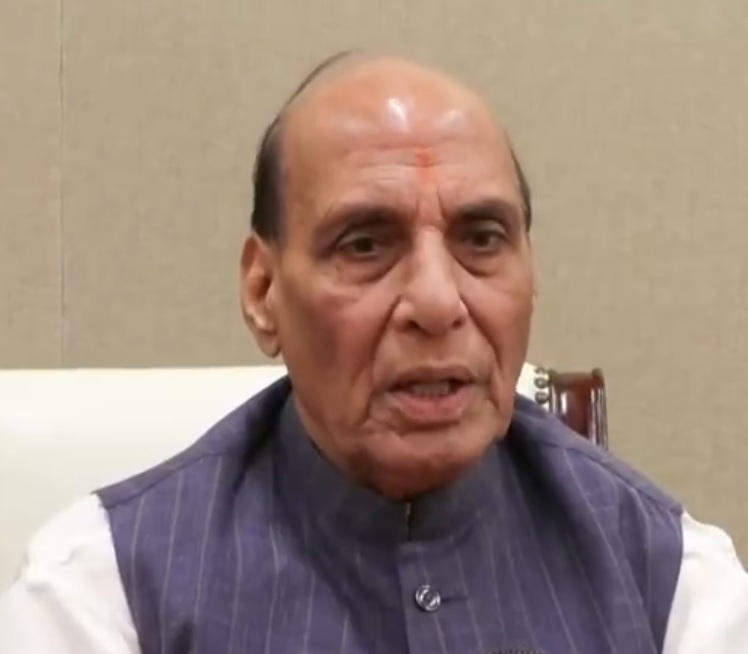
New Delhi, Oct 26 (UNI) Defence Minister Rajnath Singh today called for a new phase of self-reliance in the defence sector, emphasising indigenous development of advanced technologies, stronger research and development (R&D), and resilient domestic supply chains to reduce import dependence and strengthen national security.
Addressing the fifth edition of the Indian Navy's Naval Innovation and Indigenisation Seminar, SWAVLAMBAN 2026, in New Delhi, Singh said the country must build on the achievements of the first phase of Aatmanirbharta and pursue more ambitious technological goals in line with the vision of Viksit Bharat@2047. He stressed that the next phase must focus on developing indigenous products that are cost-effective, operationally superior and globally competitive.
Calling supply chain management a strategic imperative rather than merely a technical concern, the minister said, "Supply chain dependencies arise from a limited domestic availability of certain raw materials, such as rare earth elements, and the absence of specific technologies within the country. While some external dependencies may persist until viable alternatives are developed or domestic resources become available, there is a need to prioritise critical areas for indigenisation." Singh cautioned against waiting for a crisis to assess vulnerabilities, calling for advance evaluation of buffer stocks, domestic production capacities and potential disruptions to supply routes. He identified research and development as central to overcoming these challenges and expressed confidence that sustained investment and focused efforts would enable Indian talent to develop cutting-edge technologies.
Emphasising the need to change attitudes towards failure in research, Singh said innovation required mechanisms that could support high-risk, high-reward projects. "While this risk aversion is, in one sense, natural, it also presents an opportunity. Can we develop funding mechanisms capable of supporting high-risk, high-reward projects? Can we attract more private sector participation in R&D, given its greater propensity for risk-taking?" he asked.
The minister stressed that India must advance in two key areas, private sector participation and low-cost technologies, to strengthen its research ecosystem. Citing countries such as Israel, South Korea and the United States, where innovation is embedded in the research culture, Singh called for stronger industry-academia collaboration, greater encouragement within educational institutions and more opportunities for young people to pursue careers in research.
"Stronger industry-academia collaboration, greater encouragement in educational institutions and increased opportunities for youth is a key for fostering a deep-rooted culture of research and innovation," he noted. Highlighting the contribution of the Innovations for Defence Excellence (iDEX) initiative, Singh said it had enabled start-ups and micro, small and medium enterprises (MSMEs) to develop technologies that India previously imported. More than 4,000 proposals have been submitted against 229 challenges issued by the Indian Navy, reflecting the breadth of domestic technological talent and entrepreneurial interest, he said.
The minister also underlined the need to reduce naval shipbuilding costs while expanding indigenous production, given the increasing demand for warships amid the evolving security environment in the Indian Ocean Region. "Our Government has ensured that a lack of funding does not become an obstacle to the aspirations of our talented youth. Naval contracts worth over Rs 1,900 crore demonstrate that our efforts are delivering tangible results. The steady progress of our Navy is a testament to this resolve," he said. He called for addressing the remaining areas of import dependence, particularly Buyer Nominated Equipment, to further advance the Navy's self-reliance efforts.
Singh also advocated a 'Dual Technology Roadmap' to identify technologies that could serve both civilian and military requirements. He said indigenisation efforts should extend beyond the existing Positive Indigenisation Lists to include priority technologies and products required for civil and military shipping. The minister further proposed identifying technologies that could be used across the Army, Navy, Air Force and Indian Coast Guard, describing this as a technological application of inter-service jointness. "Need to develop technologies for civil & military applications and inter-service utilisation to promote jointness," he said.
Singh also highlighted the importance of sustained collaboration in emerging fields such as quantum technologies, artificial intelligence in warfighting and uncrewed systems, stressing that the development of advanced capabilities required perseverance and a clear understanding of future operational requirements. The two-day seminar, being held at the Manekshaw Centre on October 26 and 27, is organised by the Indian Navy in collaboration with the Defence Innovation Organisation and the Society of Indian Defence Manufacturers. This year's theme is 'Strength and Power through Innovation and Indigenisation'.
UNI PWS SS


