


"Don't use a hammer to kill a fly": SC cautions against excessive curbs, rules out blanket Metro shutdown
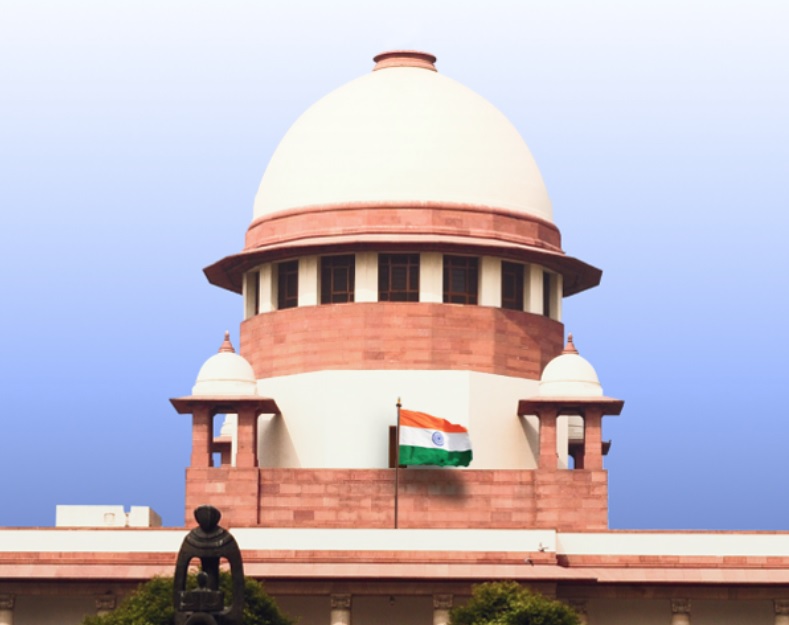
New Delhi, Oct 9 (UNI) Cautioning authorities against excessive security restrictions ahead of the October 10 protests in the national capital, the Supreme Court on Friday said "don't use hammer to kill a fly" and ruled out a complete shutdown of Delhi Metro services at 57 metro station, asking the Centre instead to adopt proportionate regulatory measures.
A bench comprising Chief Justice Surya Kant, Justice Joymalya Bagchi and Justice V. Mohana drew a distinction between regulating movement in the interest of law and order and imposing sweeping restrictions that inconvenience ordinary citizens. The court expressed particular concern over the closure of entry gates at 57 Metro stations and the impact on employees, students and senior citizens dependent on public transport.
Recording Solicitor General Tushar Mehta's assurance that the restrictions would be reconsidered, the bench said Metro trains and other railway services should be allowed to operate in a suitably regulated manner, keeping in view the principle of proportionality. It specifically directed that there should be no complete prohibition on movement of Metro trains.
The court also asked the authorities to give wide publicity to whatever regulated arrangement was eventually put in place so that commuters were informed in advance and unnecessary inconvenience could be avoided.
Expressing concern over the impact of the restrictions on ordinary commuters, CJI Kant said: "Solicitor... we are mainly concerned about the complete closure of these metro station entries. We have serious concerns about this. Our concern is not with respect to any protesters or any individual. Our concern is about the hundreds and thousands of commuters who come from Gurugram, Greater Noida, East Delhi and South Delhi to Delhi for their livelihood. They are students, employees and senior citizens who travel by public transport. We are speaking on behalf of the common citizens of this city." The bench said law-enforcement agencies undoubtedly had the authority to impose regulatory measures where necessary but cautioned against restrictions that effectively deprived citizens of access to public transport. "The law enforcement authorities are certainly entitled to take regulatory measures. There is no doubt about that. If you want to restrict unruly movement, you can do so, but that does not mean you can bring everything to a halt and leave people without any transport facility. Everybody does not have a car. Everybody does not have access to private transport. People depend on public transport," the bench said.
The court stressed that security concerns had to be balanced against the daily needs of employees, students, senior citizens and others commuting from Gurugram, Greater Noida and different parts of the National Capital Region. Mehta assured the bench that its concerns would be conveyed to the government and proportionate measures considered. The bench also asked the Centre to reconsider Jantar Mantar as the designated protest venue and examine whether an alternative site could be identified.
The court was hearing petitions, including one filed by CPI(M) General Secretary M.A. Baby, challenging restrictions imposed ahead of the proposed protests. Senior advocate Kapil Sibal, appearing for Baby, sought urgent intervention, pointing to cancellation of trains, closure of Metro stations, internet restrictions and curbs on hotel accommodation. "What is happening to my country?" Sibal asked while questioning the scale of the restrictions.
"All trains have been cancelled, 57 metro stations are shut, people are being denied accommodation in hotels, and Nizamuddin has been closed. RWAs are reportedly being told not to allow people to step out. What is happening to my country? This is a peaceful protest. How can this be allowed to happen?" he said.
UNI PK CDS


