


Hung Knesset: Netanyahu weakened, Arab parties set to decide next government
Arti Bali
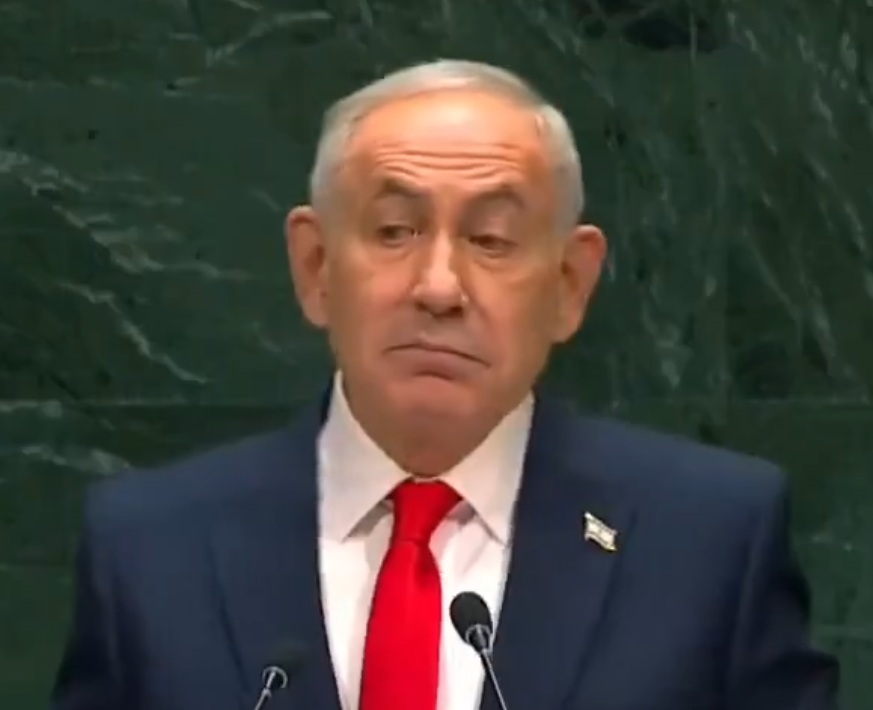
Tel Aviv, Oct 29 (UNI) Prime Minister Benjamin Netanyahu, Israel's longest-serving leader, has been weakened in one of the country's most consequential elections, with his bloc falling short of a parliamentary majority reflects people have voted for a change after the October 2023 Hamas attack. With 90 per cent of votes counted, Netanyahu's Likud and its far-right and ultra-Orthodox allies are projected to win 53 seats in the 120-member Knesset.
The opposition bloc led by former military chief Gadi Eisenkot is set to take 48 seats, while Arab-led parties are projected to win 19, potentially giving them a decisive role in coalition talks. Neither main bloc is on course to reach the 61 seats needed to form the government and govern. The final results are expected once the counting is complete. Both Netanyahu and Eisenkot have said they will try to form the next government.
President Isaac Herzog has urged parties to avoid another election and is expected to consult them before choosing the candidate best placed to build a coalition, who will then have 28 days to form the government. Netanyahu is expected to seek support from opposition lawmakers, though several parties have ruled out joining a unity government with him.
Eisenkot, for his part, must decide whether to court Arab-Israeli parties, whose backing could be crucial but some within his own bloc oppose such an arrangement. Opposition politician Yair Golan has urged rival parties to cooperate with Arab-led factions to replace Netanyahu. Arab-Israeli parties say their voters turned out in significant numbers to prevent Netanyahu from returning to power, arguing that their electoral support gives the opposition an opportunity to form a government.
Yousef Jabareen, leader of the Joint Arab List, said his bloc was ready to help remove the government and pitched Jewish-Arab cooperation as the alternative. "In the face of a government of bloodshed, and in the face of politics of supremacy, racism, and exclusion, we offer a completely different alternative," Jabareen wrote on X. "Change runs through a Jewish-Arab partnership - a genuine and equal partnership.
Nothing less, and nothing more." Netanyahu has criticised the idea of an opposition government relying on Arab parties, arguing that some of them reject Israel's Jewish and Zionist character. The results appear to reflect an electorate divided between voters seeking a change from Netanyahu's hardline, polarising vision of Israel and those who remain uncertain about what political alternative should replace it.
The two key players are the Joint Arab List, which brings together the communist Hadash, the secularist Ta'al and the nationalist Balad, and the smaller Islamist party Ra'am. Ra'am draws much of its support from the Bedouin community, and its leader, Mansour Abbas, became the first Arab politician to join an Israeli governing coalition after the 2021 election. Most Arab citizens of Israel are descendants of Palestinians who remained after the 1948 war.
While the opposition presents itself as more secular, liberal and democratic, its parties remain broadly aligned with the government on several aspects of foreign policy and national security following the Hamas-led attack of October 7, 2023. Netanyahu, who first became prime minister in 1996 and has served for approximately 19 years across multiple terms, remains one of the most polarising figures in Israeli politics. His leadership and security record have been central to the election campaign.
Despite portraying himself as "Mr. Security", Netanyahu has faced intense criticism over the intelligence and security failures that preceded the October 7 attack, the deadliest assault in Israel's history. The attack exposed major weaknesses in Israel's defences and triggered the devastating war in Gaza. Netanyahu frequently highlights Israel's military achievements, pointing to the elimination of senior Hamas leadership and expanding operations to secure Israeli territory.
Netanyahu has framed these aggressive military campaigns as essential for regional transformation and national security, utilizing them to project strength ahead of domestic political challenges and elections. Netanyahu has also pointed to military operations against Iran and strikes in Lebanon and Gaza as evidence of his government's security policy. However, national security, the Israeli-Palestinian conflict and the future of settlements in the occupied West Bank remain major issues shaping the election.
The Israeli right has generally opposed Palestinian statehood and supported settlement expansion, while the left has traditionally been more open to territorial compromise and negotiations. Over time, however, positions once associated primarily with the right have gained wider acceptance among Jewish Israeli voters. With neither major bloc securing a clear majority, Arab-led parties have emerged as potential kingmakers in the election.
The Joint Arab List and the smaller United Arab List, known as Ra'am,will play a crucial role in determining whether Netanyahu remains in power or the opposition manages to form a government. The debate over cooperation intensified after opposition politician Yair Golan urged rival parties to work with Arab-led factions to establish a government capable of replacing Netanyahu.
Netanyahu has repeatedly criticised the prospect of an opposition government relying on Arab-led parties, arguing that some of those factions oppose Israel's Jewish and Zionist character. Separately, the Times of Israel reported that Likud suspects Qatar and Turkey may have been sources of funds sent to groups mobilising Arab voters. Channel 12 reported that the Shin Bet is investigating after Supreme Court Justice Noam Solberg, head of the Central Elections Committee, asked agency chief David Zini to probe suspected foreign funding and possible electoral bribery by a foreign entity.
The reports say the transfer channels resemble those once linked to terror financing. Supreme Court Justice Solberg reportedly instructed Shin Bet chief David Zini to investigate suspicions of foreign funding and possible electoral bribery by a foreign entity.
UNI AAB RSA


