


How Credit Card Posting Dates Can Change Offer and Milestone Eligibility
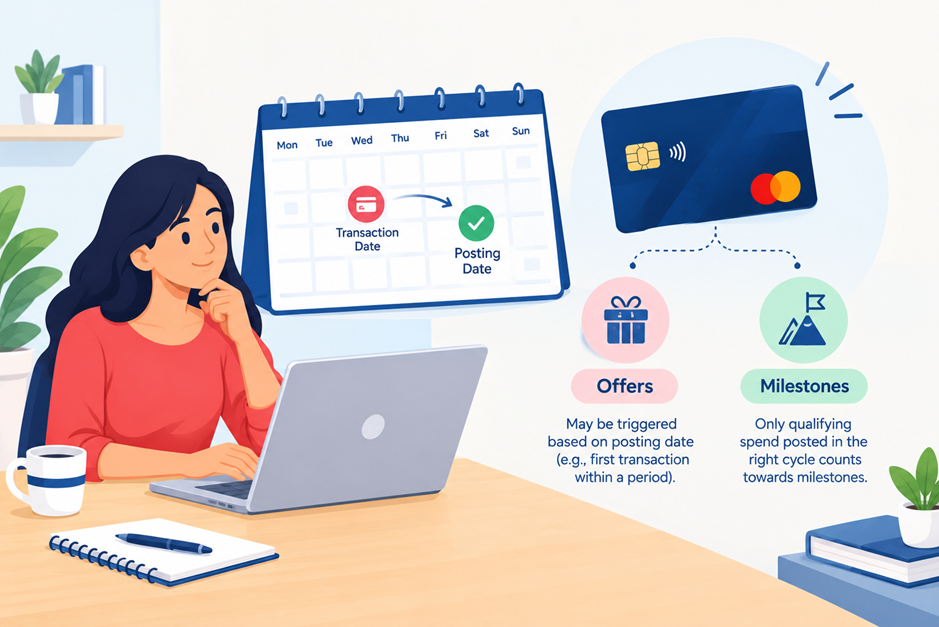
Imagine making a large card payment just before an offer ends, only to find that the reward is not counted the way you expected. The issue may not be the amount or the merchant. It may be the date used by the issuer. Credit card benefits can depend on transaction date, posting date, settlement date, or billing cycle. This guide explains how those dates work and why checking the terms of a credit card offer matters before planning a major spend.
What Is a Credit Card Posting Date
A credit card posting date is the date on which a transaction is recorded in the card account after processing. It can differ from the date on which the cardholder made the purchase.
The difference is usually simple:
| Date Type | Meaning |
| Transaction Date | The date the cardholder made the payment. |
| Posting Date | The date the transaction appears in the card account. |
| Settlement Date | The date the transaction is settled through the card/payment network process. |
| Statement Date | The date the card issuer generates the monthly bill. |
| Payment Due Date | The date by which the billed amount should be paid. |
For everyday spending, a gap of one or more days may not create concern. For an offer closing near month-end or a milestone period deadline, the date used in the terms can decide whether the transaction qualifies.
How Can Posting Dates Change Credit Card Eligibility
Credit card eligibility for an offer can depend on the date the issuer uses to count eligible spends. Some offers count transactions made during the offer period, while some milestone programmes count transactions posted or settled during the defined period.
This creates a timing risk in cases such as:
- Purchases made close to the offer end date
- Transactions made on weekends or public holidays
- Merchant settlement that happens after the cardholder pays
- International transactions that post later
- Cancelled or reversed transactions
- EMI conversions or refunds processed after the original purchase
Before relying on a benefit, cardholders should check whether the terms refer to transaction date, posting date, settlement date, statement cycle, or milestone period. Credit card eligibility should not be assumed from the purchase date alone.
How Do Posting Dates Affect Milestone Benefits
Milestone benefits usually depend on eligible spends during a defined period. The period may be monthly, quarterly, annual, anniversary-based, or offer-specific. If the programme counts settled or posted transactions, a purchase made near the end of the period may fall into the next milestone cycle.
For example:
| Situation | Possible Impact |
| Purchase on the last day of the milestone | It may be posted after the period closes. |
| Refund appears after milestone calculation | Eligible transactions may be reduced. |
| EMI conversion is excluded | Spending may not count towards milestones. |
| Merchant category is excluded | Payment may not qualify at all. |
| Cap is already reached | Extra spending may not add more benefit. |
This is where credit card eligibility becomes more than just about card approval. The cardholder also needs to check whether each transaction qualifies for the specific reward or milestone.
What Happens When Transactions, Refunds, and EMIs Post Later
Later posting can change the final reward calculation because the card account may not treat every entry the same way. A purchase, refund, reversal, fee, charge, EMI conversion, or cashback credit can affect the account differently.
Cardholders should check these points:
- Pending transactions: A pending charge is not always the same as a posted transaction.
- Refunds: A refund can reduce the net eligible spend for an offer or milestone.
- Reversals: Failed or reversed transactions generally do not count as final eligible spends.
- EMI conversions: Some offers exclude EMI transactions or treat them separately.
- Fees and charges: Annual fees, interest, taxes, and penalties generally do not count as retail spends.
- Merchant category: Merchant Category Code (MCC) exclusions can override the purchase description.
A credit card offer should therefore be read with its exclusions, caps, posting rules, and refund treatment together.
How Should Cardholders Track Offer Dates
Cardholders should track offer dates by keeping the purchase date and the posted transaction date in view. This is especially important for high-value spends planned around cashback, vouchers, fee waivers, or milestone rewards.
A simple tracking method works well:
| Factor | Importance |
| Offer start and end date | Shows the active benefit period. |
| Transaction date | Shows when the purchase was made. |
| Posting or settlement rule | Shows which date the issuer may count. |
| Statement cycle | Helps connect the spend with the bill. |
| Eligible spend amount | Helps check progress towards a milestone. |
| Refunds or reversals | Helps avoid overestimating benefits. |
Before assuming credit card eligibility for a milestone, cardholders should wait for the transaction to post and check whether it appears as an eligible spend under the card or offer terms.
What Should You Check Before Using an Offer
Cardholders should check the date rule, spend rule, and repayment rule before planning a major transaction around rewards. A headline benefit is clearer when the cardholder understands how the issuer counts eligible spends.
Before you apply credit card benefits to a planned spend, check:
- Whether the offer uses transaction date, posting date, or settlement date
- Whether the purchase category is eligible
- Whether Merchant Category Code (MCC) exclusions apply
- Whether refunds, reversals, or EMI conversions reduce eligible spends
- Whether there is a monthly, quarterly, or annual cap
- Whether the milestone period is calendar-based or card-anniversary-based
- Whether the card account must remain active and in good standing
- Whether the full bill can be paid by the due date
This approach helps cardholders compare benefits without overestimating rewards or missing a milestone due to timing.
Conclusion
Posting dates can quietly affect credit card eligibility for rewards, cashback, vouchers, and milestone benefits. A purchase made during the offer window may not qualify if the card terms count posting or settlement date and the transaction appears later. Cardholders should read the offer terms, track posted transactions, check exclusions, account for refunds, and avoid waiting until the last day for milestone spends. Used with these checks, credit card benefits become easier to plan and easier to verify.
Disclaimer: The above press release comes to you under an arrangement with PR agency. UNI takes no editorial/ legal responsibility for the same.


