


Jairam Ramesh invokes Pranab Mukherjee to defend Opposition's role, challenges Rajnath Singh
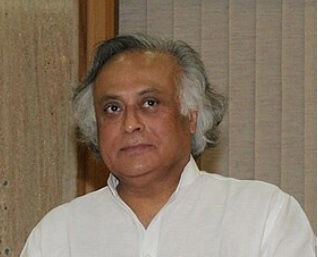
New Delhi, Oct 16 (UNI) Congress general secretary in-charge communications Jairam Ramesh has invoked former President Pranab Mukherjee's description of the Opposition's role in a democracy to counter Defence Minister Rajnath Singh's allegations that the Congress and its allies are seeking to engineer a Bangladesh-style change of government in India.
In a post on social media platform X, Ramesh said Singh needed to be reminded of what Mukherjee, who was awarded the Bharat Ratna in 2019, would often say: "The job of the Opposition in a democracy is to oppose, expose and depose." In a pointed follow-up message directed at the Defence Minister, Ramesh added: "Tell us those other reasons, Raksha Mantriji." Ramesh's remarks came after Singh, addressing a press conference in Lucknow on Friday, accused the Congress and its political allies of attempting to bring about a Bangladesh-style political change in India.
He alleged that protests against the Election Commission were being used to foment unrest and undermine democratic institutions. Singh claimed that opposition parties were drawing young people into political confrontation instead of pursuing genuine electoral reforms. He described the Congress's campaign against constitutional bodies as its "fourth unforgivable crime". The exchange comes amid an intensifying confrontation between the BJP-led government and opposition parties over the functioning of constitutional institutions, electoral processes and the Opposition's right to question the government.
The Congress and other opposition parties have repeatedly raised concerns about the Election Commission and its handling of electoral matters, while the BJP has accused them of politicising constitutional bodies. By invoking Mukherjee's formulation, Ramesh sought to underline the Congress's position that opposing the government, exposing its shortcomings, and seeking to replace it through democratic means are legitimate functions of an opposition party in a parliamentary system.
His challenge to Singh to spell out the "other reasons" appeared to question the basis of the Defence Minister's allegations. Mukherjee, who served as President from 2012 to 2017, had held several senior positions in the Congress and the union government during a long parliamentary career before assuming the country's highest constitutional office. His description of the Opposition's responsibilities continues to feature in political debates over the balance between government authority and parliamentary accountability.
The latest exchange reflects the widening political dispute over the nature of opposition protests and criticism of constitutional institutions, with the Congress defending its campaign as part of its democratic responsibilities and Singh accusing the party of seeking to destabilise the political system.
UNI SKA RSA


