


Congress accuses Modi govt of using Census 2027 to further RSS-BJP interests
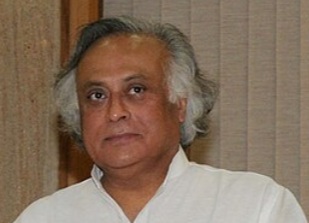
New Delhi, Oct 17 (UNI) Congress general secretary in-charge communications Jairam Ramesh has accused the Narendra Modi government of expanding the eligibility criteria for enumerators for Census 2027 with an alleged political motive, warning that the move, viewed alongside an RSS training camp and a government committee's invitation for public inputs on demographic changes, could compromise the impartiality and credibility of the nationwide exercise.
In a strongly worded post on social media platform X, Ramesh alleged that the government's decision to widen the pool of eligible enumerators was part of a broader design to involve cadres associated with the Rashtriya Swayamsevak Sangh (RSS) and the Bharatiya Janata Party (BJP) in the census process. He questioned the timing of the October 16 notification, linking it to an RSS training camp held in Belgaum, Karnataka, from July 10 to 12, and a subsequent call for public inputs by a committee constituted by the union Home Ministry to examine demographic changes in the country.
"The Modi govt has now expanded the list of eligible enumerators for Census 2027. There is much mischief behind it," Ramesh said, alleging that the RSS had organised a major training camp for its cadres in Belgaum with the "single-point agenda of Census 2027". The Congress leader also questioned the composition and independence of the High-Level Committee on Demographic Changes, which he said was constituted by the union Home Ministry on May 26.
According to Ramesh, the committee invited members of the public as well as Indian and foreign organisations to submit inputs on demographic changes in India, raising questions, in his view, about the purpose of the exercise and the affiliations of those overseeing it. "The only thing high level of this committee is the affiliation of its members to the RSS ecosystem. So we know where these inputs will come from," he alleged. Ramesh argued that the sequence of events - the RSS training camp in July, the committee's invitation for inputs on October 14 and the census notification issued on October 16 - warranted scrutiny.
He claimed that the expanded eligibility criteria could open the door to the recruitment of thousands of RSS and BJP workers for census-related duties, potentially turning a national statistical exercise into an opportunity for partisan mobilisation. "It is clear this is a Rozgar Guarantee Yojana for thousands of RSS/BJP workers," Ramesh alleged, warning that the move could further erode public confidence in the census. "This will most certainly further contaminate an already subverted Census. Another institution is being destroyed," he added.
Escalating his criticism, Ramesh accused Prime Minister Narendra Modi and union Home Minister Amit Shah of pursuing what he described as "diabolical designs", alleging that their attempts to undermine public institutions knew no bounds. He drew a parallel with the Special Intensive Revision (SIR) of electoral rolls, another contentious issue between the Congress and the BJP, warning that the census could similarly become vulnerable to alleged manipulation. "Like SIR, the Census will also be dangerously doctored," he claimed.
The Congress has repeatedly accused the BJP-led government of using administrative processes and public institutions to advance its political interests. Ramesh's latest allegations extend that confrontation to the preparations for Census 2027, an exercise of considerable importance for the country's governance and development planning.
The census provides essential data on population, households and demographic characteristics, informing the formulation of public policy, welfare programmes, infrastructure planning and the distribution of resources across regions and communities. Its credibility depends on the systematic collection of accurate information, adherence to established procedures and public confidence in the neutrality of the officials entrusted with the exercise.
The allegations made by Ramesh, however, do not by themselves establish that the expanded eligibility criteria or the committee's activities are evidence of political interference. The key questions are whether the revised criteria are justified by administrative requirements, how enumerators will be selected and supervised, and what safeguards will ensure that the collection and processing of census data remain impartial.
The government's decision to expand the pool of eligible enumerators, the composition and mandate of the demographic changes committee, and the safeguards governing the census process are therefore likely to come under closer political scrutiny as preparations advance. Ramesh's intervention signals the possibility of another confrontation between the Congress and the Modi government over the functioning of public institutions, with the Opposition party warning that Census 2027 must not become a vehicle for partisan mobilisation. At the heart of the dispute is the question of whether the government can demonstrate that the selection of enumerators and the collection of demographic data will be conducted transparently, professionally and without political influence.
UNI SKA ATP AAB


