


Rajnath Singh calls for open, inclusive Indo-Pacific, deeper defence ties with ASEAN
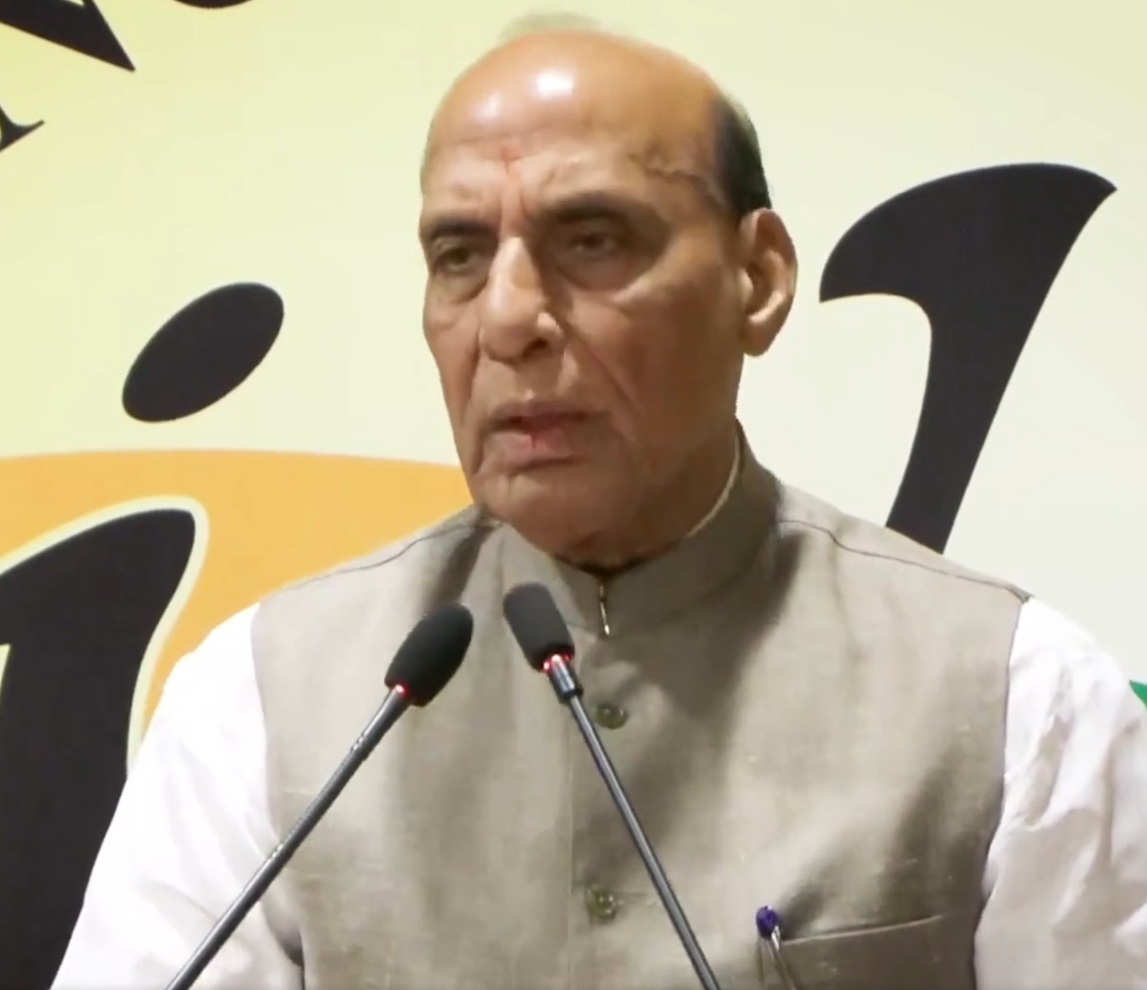
New Delhi, Oct 14 (UNI) Defence Minister Rajnath Singh on Wednesday called for a free, open and inclusive Indo-Pacific where countries can make independent choices and pursue development peacefully, stressing the need for greater trust, respect for sovereignty and adherence to international law amid growing strategic competition and emerging security threats.
"India seeks an Indo-Pacific where all countries, large and small, make their own choices, protect their interests and pursue development in peace," Singh said, while addressing the inaugural ASEAN-India Defence Think Tank Forum at the Manohar Parrikar Institute for Defence Studies and Analyses (MP-IDSA) here. Emphasising dialogue as a means of preventing tensions from escalating, he said, "India believes that security is strengthened when countries build capacity together, respect international law and maintain trust through dialogue."
Singh said India and the Association of Southeast Asian Nations (ASEAN) shared a common interest in regional peace, stability and prosperity. He underlined that India's Act East policy, along with its SAGAR (Security and Growth for All in the Region) and MAHASAGAR (Mutual and Holistic Advancement for Security and Growth Across Regions) visions, complemented ASEAN-led mechanisms and supported an open, multipolar regional order. He cautioned that the region faced multiple challenges, including terrorism, cybercrime, piracy, trafficking, illegal fishing, climate-related disasters and vulnerabilities in critical supply chains, besides strategic competition and tensions at sea.
No single country could tackle these challenges independently, he said. "India's approach and ASEAN's outlook on the Indo-Pacific can complement each other. We should strengthen cooperation, not create competition between regional forums," Singh said, advocating peaceful resolution of differences before they developed into disputes. Highlighting maritime security as a shared priority, the Defence Minister said the Indian Ocean and Southeast Asian waters constituted a connected maritime space vital for trade, energy and the movement of essential goods. "Strengthening maritime domain awareness, interoperability and collaboration in underwater awareness will be key to ensuring a stable, rule-based maritime order," he said.
With 2026 designated as the ASEAN-India Year of Maritime Cooperation, Singh called for improved maritime information-sharing, stronger coordination between navies and coast guards, and joint responses to emergencies. He also stressed cooperation against piracy, trafficking and illegal fishing in accordance with international law. On defence technology, he highlighted the growing significance of artificial intelligence, drones, cyber capabilities and space-based systems, noting that recent conflicts had demonstrated how relatively inexpensive drones could challenge costly defence systems.
"India believes that innovation should not remain limited to a few large organisations. Start-ups, universities, research institutions and smaller companies can all contribute," he said, citing the Innovations for Defence Excellence (iDEX) initiative and the Technology Development Fund (TDF) as platforms to engage innovators. He proposed joint research, shared testing facilities, exchanges among young researchers and innovation challenges focused on counter-drone systems, cyber defence, maritime surveillance and disaster response.
Such collaboration, he added, must safeguard sensitive information, respect intellectual property and ensure responsible technology-sharing. Calling for closer defence industrial partnerships, Singh said India was ready to explore cooperation with ASEAN countries in patrol vessels, radars, air-defence systems, helicopters, drones and other technologies based on their respective requirements. "Self-reliance does not mean working in isolation; it can create opportunities for trusted partners to design, build, maintain and improve equipment together," he said. He emphasised that co-development, co-production, maintenance, repair and overhaul (MRO), training and long-term technical support could strengthen local capabilities, generate industrial opportunities and improve supply-chain reliability.
"Our goal should be lasting partnerships, not one-time transactions," Singh said, calling for clear requirements, reliable after-sales support, appropriate technology safeguards and fair sharing of responsibilities and benefits.
UNI PWS ATP


