


US completes Iraq troop withdrawal, ending 12-year mission against ISIS
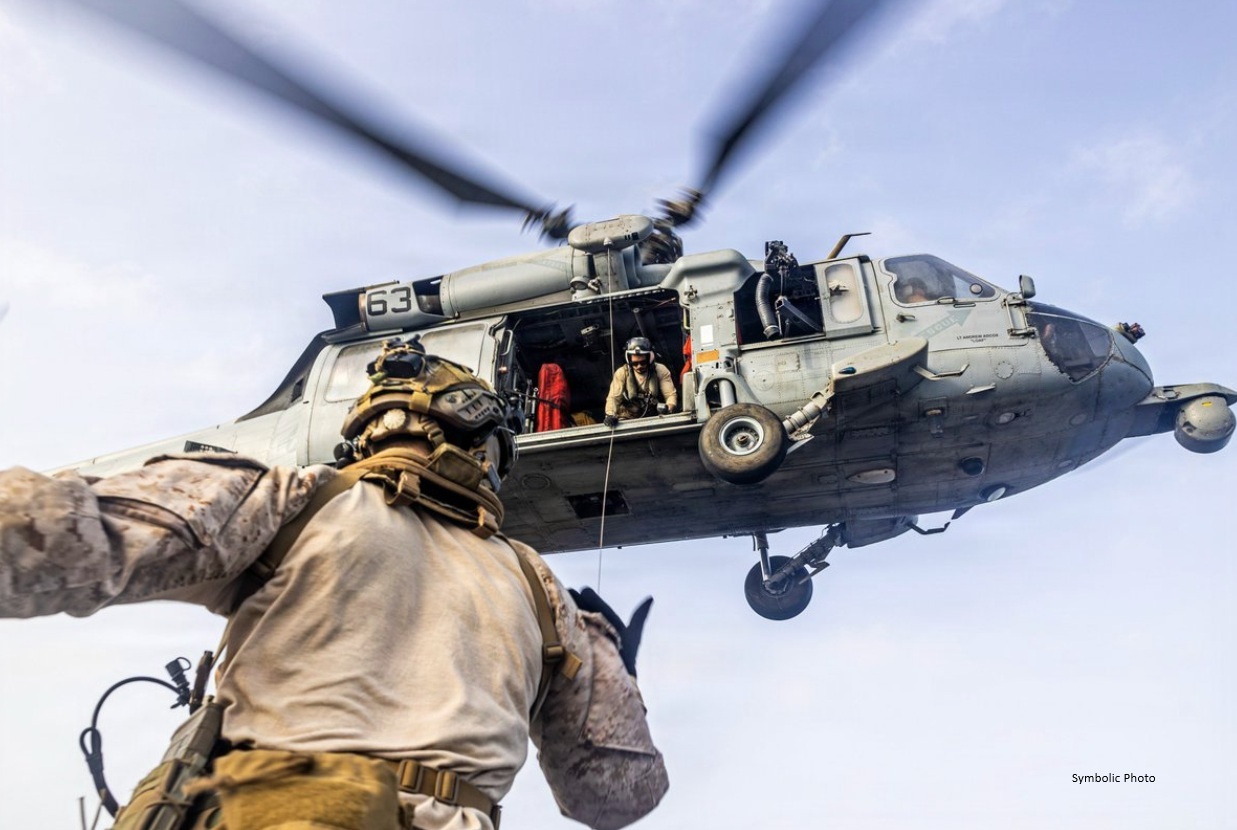
Baghdad, Sept 30 (UNI) The United States on Wednesday completed the withdrawal of its troops from Iraq, formally ending a 12-year military mission to fight Islamic State and shifting the relationship with Baghdad toward bilateral security cooperation.
The last US troops and equipment left a military base in Erbil, in Iraq's semi-autonomous Kurdistan region, under an agreement reached by Baghdad and Washington in 2024. The withdrawal comes as the wider Middle East remains unsettled by the ongoing conflict between the United States and Iran, which has also drawn in Iraq. Baghdad has presented the departure as a sign of its growing sovereignty, while Iran-backed armed groups in Iraq welcomed the end of the US military presence.
Pentagon chief spokesman Sean Parnell said US forces had completed an "orderly departure" from Erbil Air Base, describing the move as the end of a campaign that had defeated Islamic State as an organised military force in Iraq. The withdrawal, he said, marked a transition from a wartime coalition mission to an Iraqi-led security effort supported by a more conventional bilateral security relationship. U.S. Central Command (CENTCOM) completed the orderly departure of U.S. forces and equipment from Erbil Air Base, Sept. 30, marking the end of the Operation Inherent Resolve mission in Iraq.
The move from Iraq is part of a planned transition to a U.S.-Iraq bilateral defense relationship. Combined Joint Task Force-Operation Inherent Resolve (CJTF-OIR) remains operational and is now headquartered in Jordan as U.S. forces continue the counter-ISIS mission in Syria alongside Coalition partners and the Syrian government. CJTF-OIR has advised, assisted, and enabled partner forces in the fight against ISIS in Iraq and Syria since CENTCOM established the unit in 2014. "Job well done to the tens of thousands of American service members, diplomats, and civilian personnel who answered the call in Iraq," said Adm.
Brad Cooper, CENTCOM commander. "Because of your grit, sacrifice and professionalism, ISIS no longer poses a systemic threat to Iraq's national security and Iraqi security forces, including the Peshmerga and other Iraqi Kurdistan Region security forces, now possess the capacity, leadership, and operational independence to unilaterally manage threats to their homeland."
Iraqi Prime Minister Ali al-Zaidi described the move as the beginning of a" new phase centred on Iraq's sovereignty, stronger state institutions,the readiness of its forces, and balanced partnerships with other countries." Iraq's national security adviser Qasim al-Araji termed the end of the US-led coalition mission as an "important milestone" following negotiations that began in 2021. He said security and intelligence cooperation, information-sharing and capacity-building would continue with coalition members on the basis of mutual interests. The US military first invaded Iraq in 2003 to oust Saddam Hussein and withdrew in 2011.
Three years later, Baghdad invited US-led forces back after Islamic State ISIS seized large parts of Iraq and Syria. The US-led coalition provided Iraqi forces with air support, intelligence and training as they fought to reclaim territory from the militant group. Iraq declared victory over Islamic State in 2017, although the group has continued to operate through scattered cells. Washington and Baghdad agreed in September 2024 to wind down the coalition's military mission in Iraq by the end of September 2026 and move toward bilateral security ties.
Most US forces had already withdrawn from Iraqi bases last year, with several hundred troops remaining in the Kurdistan region. The final withdrawal has nevertheless caused concern among some Kurdish officials, particularly over the departure of US air defence systems. The Kurdish regional government's Peshmerga Ministry said the region had come under more than 1,000 drone and ballistic-missile attacks during the recent U.S.-Iran conflict.
"The departure of the United States from the Kurdistan Region under these complex regional circumstances, without the provision of a defence system, is a matter of concern," it said. Iran-aligned Iraqi groups, meanwhile, celebrated the withdrawal. Abu Mujahid al-Assaf, a security official with the powerful Kataib Hezbollah militia, called it the expulsion of U.S. forces from Iraq and said it marked the beginning of "full sovereignty".
The US Department of War said Iraqi security forces would now take primary responsibility for the country's remaining security challenges, including Islamic State remnants and Iran-aligned militias, while Washington would continue to provide targeted training and intelligence support.
UNI AAB


