


Samson sets the stage, Dhir delivers the knockout as India pull off Christchurch thriller
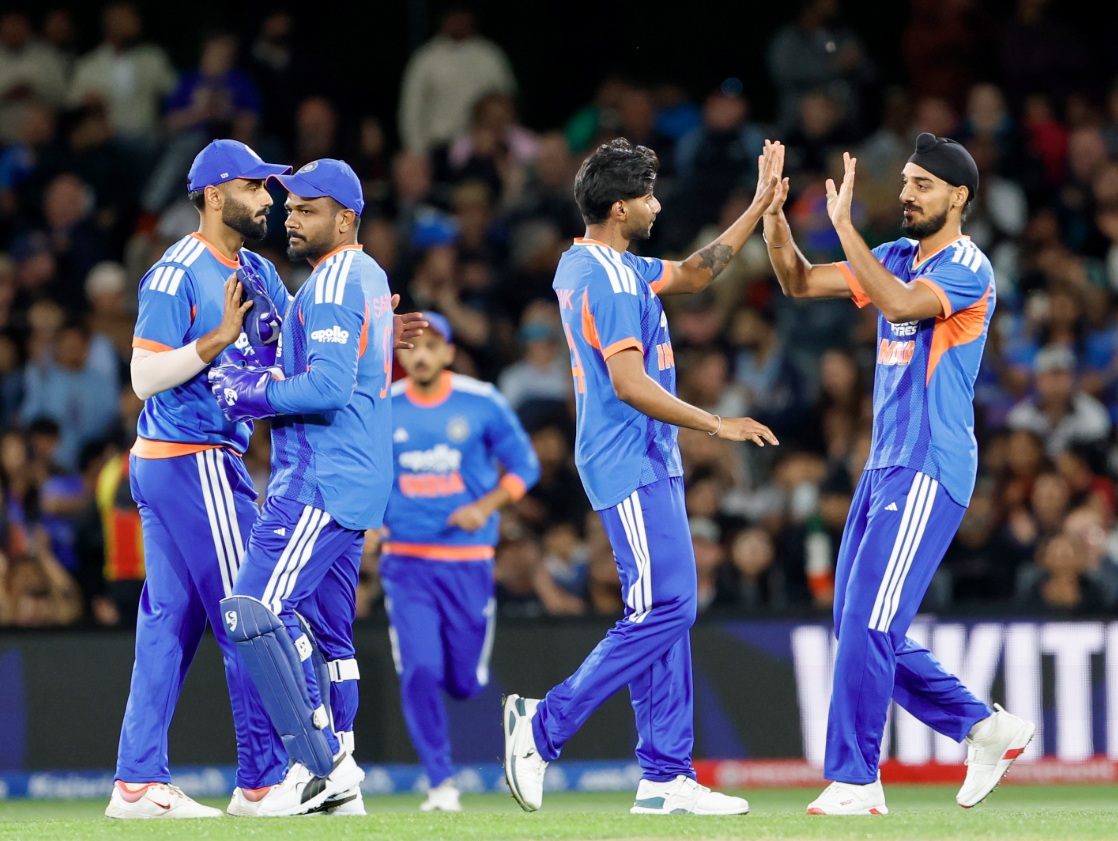
Christchurch, Oct 22 (UNI) Sanju Samson provided the fireworks, Naman Dhir supplied the finishing touch, and New Zealand were left wondering how a total of 225 for four could still end in defeat. In a contest where bowlers were often reduced to spectators, India chased down 226 to win the opening T20 International by four wickets, reaching 230 for six in 19.4 overs at Hagley Oval here on Thursday.
If Samson's bat was the instrument that set the chase in motion, Dhir wielded it like a man who had no intention of allowing the contest to drift into the final over's final moments. His unbeaten 42 off just 15 balls, studded with five fours and two sixes, turned a tense finish into a memorable Indian victory and gave the visitors a 1-0 lead in the three-match series.
Samson, with 67 off 33 balls, had already made the target look less intimidating than it appeared on paper. His eight fours and four sixes were not merely a collection of powerful strokes; they were a statement of intent. He found the gaps, punished anything short and made good use of the pace offered by the New Zealand attack.
Abhishek Sharma was equally destructive at the other end, blasting 29 off 12 balls, including three sixes. The opening pair raced to 93 in just 35 deliveries, leaving New Zealand searching for answers almost before their bowlers had settled into their spells. India collected 94 runs in the powerplay, an indication of just how quickly the contest had shifted from a chase to an assault.
Samson brought up his half-century in 23 balls, demonstrating that acceleration need not always involve wild swings. He picked his lengths early and made the bowlers pay for even marginal errors. His dismissal for 67, bowled by Mitchell Santner while attempting a cut, briefly offered New Zealand a way back into the match.
And Santner, to his credit, made the most of that opening. Michael Bracewell removed Abhishek and Tilak Varma, while Santner dismissed Ishan Kishan, reducing India to 122 for four after their spectacular start. Tilak's six off 11 balls also meant that the early momentum had been checked just when India might have expected to cruise.
This was where the chase required more than the muscle that had characterised its opening overs. Shreyas Iyer, who made 42 off 28 balls, and Axar Patel, with 24 off 14, rebuilt the innings with a 45-run partnership. Axar's three fours and a six ensured the asking rate did not become unmanageable, while Iyer found timely boundaries to keep India within reach.
Axar fell to Lockie Ferguson and Iyer departed in the 19th over, caught by Santner off Adam Milne. With the captain back in the pavilion and the finish approaching, New Zealand had reason to believe they could defend their total.
Dhir, however, had other plans.
He struck the ball cleanly but, more importantly, showed no panic. Boundaries off Nathan Smith and Milne reduced the pressure, and a six followed by a four against Santner made the equation considerably more comfortable. When Henry attempted to close out the match, Dhir found a boundary before sending the final delivery he faced over the ropes for six.
India had won with two balls remaining. Dhir's unbeaten 42 at a strike rate of 280 was the decisive late contribution in a chase that required sustained aggression and composure in equal measure.
Earlier, New Zealand had produced a formidable batting display of their own after India won the toss and elected to bowl. Glenn Phillips led the charge with an unbeaten 82 off 40 balls, striking eight fours and three sixes at a strike rate of 205.
Finn Allen set the tone with 45 off 24 balls, while Tim Seifert contributed 24 off 17. The opening pair added 49 runs before Mayank Yadav dismissed Seifert, but not before New Zealand had established an aggressive tempo. Allen continued the assault, helping the hosts reach 65 without loss in the powerplay.
Axar Patel eventually removed Allen, caught by Tilak Varma, but Daryl Mitchell ensured the scoring did not slow. His 28 off 19 balls included two fours and a six, and he shared a 42-run stand with Phillips before Arshdeep Singh dismissed him, with Bhuvneshwar Kumar completing the catch.
Phillips then assumed complete control. He combined powerful hitting with clever placement, targeting anything overpitched and exploiting the gaps whenever India's bowlers strayed from their lengths. His half-century came amid a sustained assault that grew more severe as the innings progressed.
Bevon Jacobs added 31 off 16 balls, striking three sixes, and joined Phillips in a 73-run fourth-wicket partnership off just 32 deliveries. His run-out for 31 briefly interrupted the charge, but Phillips continued alongside Michael Bracewell, who remained unbeaten on seven.
New Zealand finished at 225 for four, scoring at 11.25 runs per over. Axar conceded 51 runs in four overs, Bhuvneshwar Kumar gave away 49, while Mayank and Arshdeep claimed one wicket each.
The bowling figures told a difficult story for India, but the batting figures told an even more compelling one. New Zealand had scored enough to win many T20 matches; India simply scored more.
In the end, Samson made the chase possible, Iyer and Axar prevented it from slipping away, and Dhir ensured there was no second chance for New Zealand. It was a contest in which 225 looked imposing until India began batting, and in which a promising New Zealand comeback ended with one final flourish from a young Indian batter who refused to be overawed by the occasion.
UNI BDN


