


Iyer's leadership debut, India's series ambitions face NZ fightback
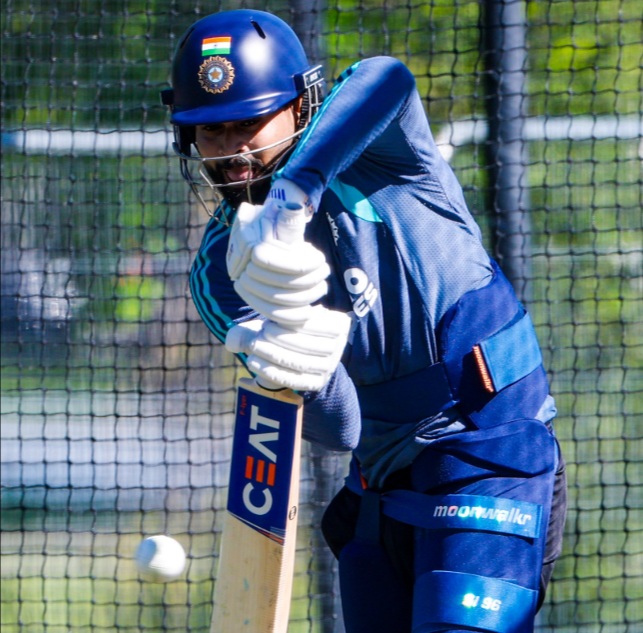
Mount Maunganui, Nov 12: A new captain, a reshuffled batting order and the prospect of a full 50-over contest will make the fourth ODI between India and New Zealand an interesting examination of India's depth and Shreyas Iyer's leadership credentials at Bay Oval here on Friday.
India enter the contest with a 2-0 advantage in the five-match series and need just one more victory to secure the honours. However, the scoreline does not tell the complete story of the contest so far, with rain repeatedly interrupting proceedings and both Indian victories being decided through the Duckworth-Lewis-Stern method. The abandoned third ODI at Hamilton further deprived the two sides of an opportunity to assess their combinations over a full 100 overs.
Friday's encounter, weather permitting, could therefore provide a more meaningful assessment of their strengths and weaknesses. For India, the spotlight will be firmly on Iyer, who takes over the captaincy after Shubman Gill and KL Rahul left to prepare for the upcoming Test series. Iyer, who was Gill's deputy in the first three matches, now has an opportunity to translate his experience into leadership at the international level. Captaincy, however, is not merely about setting fields or making bowling changes. It is about understanding the match situation, anticipating the opposition's plans and ensuring that every player knows his role. Iyer will have the advantage of experienced campaigners such as Rohit Sharma and Virat Kohli, whose understanding of ODI cricket could prove invaluable.
The more immediate challenge for Iyer will be with the bat. New Zealand's fast bowlers have identified the short ball as an area to test him, and the Indian captain will need to demonstrate that he can counter that strategy with better judgement, footwork and shot selection. He has managed 45 runs in two innings in the series, and the manner in which he responds to the short-ball challenge could be one of the important individual contests of the match. SportsAdda India's batting strength, nevertheless, remains formidable. Rohit and Kohli provide the experience and assurance that few teams can match.
Rohit's ability to dominate the powerplay and Kohli's knack of building an innings while keeping the scoreboard moving give India a strong foundation. Ruturaj Gaikwad, Ishan Kishan and Tilak Varma provide further batting options. Kishan, who is also the vice-captain for the final two matches, is expected to take over the wicketkeeping responsibilities from Rahul. Gaikwad will be keen to make the most of another opportunity, while Tilak's inclusion adds flexibility to the middle order.
The presence of Axar Patel and Kuldeep Yadav also gives India considerable depth. Axar's all-round ability and Kuldeep's variations could be particularly useful if the Bay Oval surface offers assistance to spin as the match progresses. India's bowling selection will be another area of interest. Mohammed Siraj and Arshdeep Singh offer different qualities with the new ball, while Kuldeep and Axar can provide control and breakthroughs in the middle overs. Young pacers Auqib Nabi, Gurnoor Brar and Yash Thakur will also be looking to make an impression.
New Zealand, meanwhile, have their backs against the wall. Mitchell Santner's side cannot afford another setback if they are to keep the series alive. Their challenge has been compounded by changes in personnel, with several regular players unavailable for the concluding matches. The hosts will need their top order to provide a more substantial contribution. Will Young and Tim Seifert will be important at the top, while Finn Allen's attacking approach offers the possibility of a quick start if he features in the playing XI. Michael Bracewell and Santner will have important responsibilities in the middle order. Both are capable of contributing with the ball as well, making their performances crucial to New Zealand's chances of challenging India's greater batting depth.
The return of experienced fast bowler Matt Henry to the squad could also strengthen the home side's bowling attack. Kyle Jamieson, Jacob Duffy and the other seamers will need to make effective use of the conditions, particularly in the opening overs. There is a familiar challenge awaiting New Zealand's bowlers: containing Rohit and Kohli without allowing either to settle into a long innings. Against experienced batsmen, even a slightly wayward line or length can prove expensive.
The hosts will need discipline, patience and the ability to change their plans according to the match situation. Bay Oval could provide an interesting examination of both batting and bowling techniques. The conditions are generally conducive to stroke-making, but the seamers can extract movement, particularly early in the innings. A good start with the new ball could therefore be decisive. The weather has been an unwelcome participant throughout the series, and both teams will hope that conditions allow an uninterrupted contest this time. A full match would also give Iyer a better opportunity to demonstrate his tactical approach as captain.
For India, the objective is straightforward: finish the job and take an unassailable 3-0 lead. For New Zealand, the stakes are considerably higher. They must find a way to challenge India's experienced batting line-up and prevent the visitors from dictating the pace of the contest. While India's overall balance and experience make them favourites, New Zealand playing at home cannot be discounted. The contest could ultimately depend on how effectively the hosts exploit the conditions and whether Iyer can combine his batting responsibilities with sound captaincy. A series victory would provide India with a satisfying conclusion to the ODI assignment and give Iyer a positive beginning to his leadership stint.
For New Zealand, it is an opportunity to restore some pride and ensure that the final match of the series remains competitive. The match begins at 7.30 am IST.
UNI BDN


