


Robert E Hall, Michael Woodford win Nobel Prize in Economics
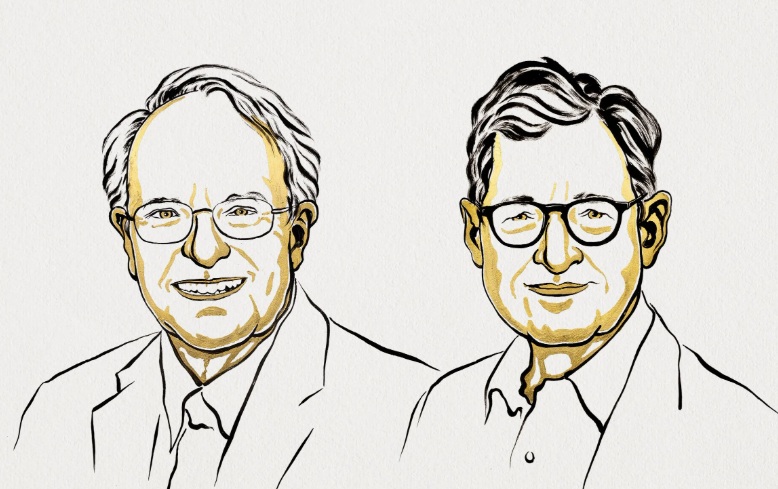
New Delhi, Oct 12 (UNI) American economists Robert E Hall and Michael Woodford have been awarded the 2026 Nobel Prize in Economic Sciences for their research on the microeconomic foundations of macroeconomic stabilisation, which has helped shape the way governments and central banks formulate economic policies.
Their work highlights how economic models based on the decisions of individual households and businesses can help policymakers better manage fluctuations in economic activity. The research provides a framework for designing fiscal and monetary policies aimed at limiting economic downturns and preventing excessive fluctuations in growth, inflation and consumption.
Hall is associated with Stanford University in California, while Woodford is affiliated with Columbia University in New York. The Royal Swedish Academy of Sciences announced the award in Stockholm on Monday. The prize, formally known as the Sveriges Riksbank Prize in Economic Sciences in Memory of Alfred Nobel, carries a monetary award of 12 million Swedish kronor, equivalent to approximately USD 1.2 million.
The announcement concludes this year's Nobel Prize cycle, following the awards for medicine, physics, chemistry, literature and peace. The economists' research represents a shift from conventional macroeconomic models that primarily relied on observed statistical relationships between indicators such as inflation, output and consumption. Their approach places individual economic decisions at the centre of macroeconomic analysis, examining how the choices made by households and businesses collectively influence the wider economy.
An important element of their work is the role of expectations in shaping economic behaviour. Households make decisions about saving and spending based partly on their expectations of future income and economic conditions, while businesses consider anticipated demand and costs when determining prices and investment plans. The research shows how clear communication of future policy intentions by governments and central banks can influence these expectations and affect economic outcomes. By accounting for how people and businesses respond to policy signals, policymakers can better assess the likely impact of interest-rate changes, government spending and other interventions.
The models developed through this approach have become important tools for analysing economic shocks and designing stabilisation measures. They can help policymakers assess how economies might respond to disruptions, including energy crises and sudden changes in household consumption, and determine the appropriate timing of policy responses. John Hassler, chair of the Committee for the Prize in Economic Sciences, said the laureates had established a strong theoretical basis for models now used by central banks and governments worldwide. Their contributions, he noted, have strengthened policymakers' ability to respond to economic shocks, including sharp movements in energy markets and unexpected changes in consumer spending.
UNI VK RSA


