


Congress flags delayed response to ECINET security concerns, Ramesh links row to Electoral Roll Centralisation
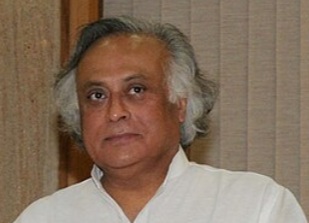
New Delhi, Oct 8 (UNI) Congress general secretary in-charge communications Jairam Ramesh on Thursday stepped up his attack on the Election Commission of India (ECI), alleging that serious vulnerabilities in its ECINET digital platform were brought to the poll panel's attention in July but that at least one of the concerns was acknowledged only on October 6, amid mounting political scrutiny of the Commission's electoral technology.
Ramesh, in a post on social media platform X, cited a report that security researcher Nisarga Adhikary had alerted the authorities about several vulnerabilities in ECINET on July 8, 2026. "A leading daily reports this morning that on July 8, 2026 a security researcher had brought several flaws in ECINET to the attention of the Election Commission. But acknowledgement of one of his several concerns came only on Oct 6, 2026 when the ECI was under all-round fire and attack," he said.
According to the report cited by Ramesh, Adhikary emailed the cyber-security agency CERT-In on July 8, with the Election Commission's complaints address copied. CERT-In reportedly responded on October 6, saying that one of the vulnerabilities had been fixed, while work on other issues was "under progress". The exact timing of the reported fix was not immediately clear.
The reported vulnerabilities related to the voter-services website and the ECINET application and allegedly included the potential exposure of the names and mobile phone numbers of election officials. The reported findings, however, concern specific weaknesses in digital infrastructure and do not, by themselves, establish that electoral rolls were manipulated. Ramesh nevertheless sought to connect the episode with the Congress's wider allegations over the centralisation of electoral-roll management through ECINET. "It is becoming abundantly clear that ECINET was designed to centralise all deletions/additions from BJP HQs in New Delhi," he alleged, escalating the party's criticism of the Commission's technology and internal processes.
The allegation comes amid an intensifying political dispute over the Election Commission's Special Intensive Revision (SIR) exercise and the management of electoral rolls. The Indian Express has reported that Election Commissioners Sukhbir Singh Sandhu and Vivek Joshi had raised objections on several occasions over the centralisation of electoral-roll software and processes in the Commission's IT division.
The ECI, however, has maintained that differences in the decision-making process do not affect the validity of its decisions and has defended the legality and integrity of its electoral procedures. The Election Commission describes ECINET as a unified digital platform integrating more than 40 applications and portals. The system covers a range of functions, including voter registration, electoral-roll searches, application tracking, complaints and communication with election officials. At its launch in January, the Commission said ECINET had been developed in accordance with the Constitution and electoral laws, with cybersecurity among its key pillars.
The Congress has repeatedly questioned the extent of centralised control exercised through the platform, particularly in relation to additions and deletions from electoral rolls. The Opposition party has also demanded greater transparency and independent scrutiny of the Commission's IT systems as part of its broader campaign against the SIR exercise and its demand for accountability from Chief Election Commissioner Gyanesh Kumar. Ramesh also sought to draw a political parallel with an earlier episode involving Adhikary. "Incidentally this researcher is the same young man who had completely exposed the CBSE's IT system a few months back that had, among other things, sealed the fate of Mantri Pradhan. It is now the turn of Pradhan Mantri," he said.
The remark appeared to be a play on the words "Mantri Pradhan" and "Pradhan Mantri", as Ramesh attempted to link the researcher's earlier work with the latest controversy surrounding the Election Commission's digital systems. His comments came a day after Opposition MPs led by Leader of the Opposition in the Lok Sabha Rahul Gandhi staged a protest demanding accountability from the Election Commission. The protest escalated into a confrontation with the authorities, with Gandhi and several other Opposition leaders being detained. The ECINET controversy has consequently acquired a wider political dimension, bringing together concerns over cybersecurity, the centralisation of electoral-roll systems and the conduct of the SIR exercise.
While the reported security vulnerabilities warrant scrutiny and clarification from the authorities, the findings cited by the Congress do not independently establish manipulation of electoral rolls. The Opposition, however, is using the episode to reinforce its demand for greater transparency, accountability and independent examination of the Election Commission's digital infrastructure.
UNI SKA ARN


