


'Mathura after Ayodhya'-BJP's new poll mantra for 2027 UP elections to counter SP's PDA strategy
Vibha Sharma
New Delhi, Nov 17 (UNI) The ruling BJP seems to have renewed its push for building a grand temple at Shri Krishna Janmabhoomi in Mathura ahead of the 2027 Uttar Pradesh Assembly elections.
"Ayodhya hui hamari hai, ab Mathura ki baari hai" (Ayodhya is ours, now it is Mathura's turn), Deputy Chief Minister Keshav Prasad Maurya was quoted as saying on Tuesday, signaling the ruling BJP's intent to make the contentious issue related to the construction at Mathura a major poll plank for upcoming elections, especially to counter the opposition Samajwadi Party's PDA (Pichhda, Dalit, Alpasankhyak) narrative.
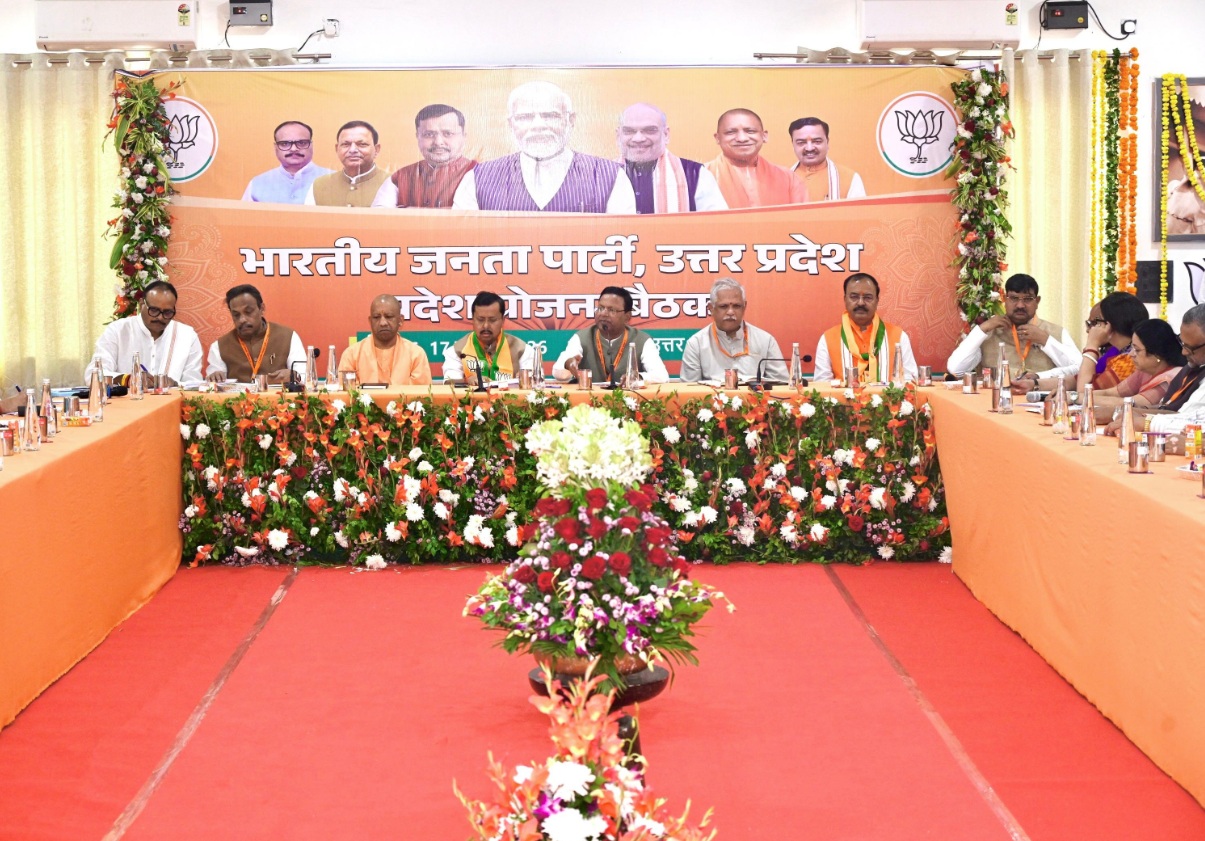
Speaking to the media, Maurya also challenged SP chief Akhilesh Yadav to support the construction of the Mathura temple, suggesting that doing so could help arrest his party's electoral decline. BJP national president Nitin Nabin was also in Mathura on Tuesday to attend the concluding day of the party's two-day brainstorming session for the upcoming elections. The choice of a BJP meeting in the Braj region associated with Lord Krishna itself carried political and cultural significance.
Sources said the Shri Krishna Janmabhoomi dispute was among the key issues discussed, particularly in the context of the next phase of the temple movement after the construction of the Ram Temple in Ayodhya. Senior leaders deliberated on strategies to secure a third consecutive term in Uttar Pradesh in 2027, address internal issues and counter SP's PDA strategy, which gained traction in the state during the 2024 Lok Sabha election and in which the Opposition party is now trying to attract upper-caste voters, they said. Discussions were also held on region-specific campaign strategies and grassroots implementation. Booth management, cadre mobilisation, social media outreach and distribution of responsibilities across organisational zones were reviewed, and the leadership also discussed outreach to first-time, Gen Z and young voters as well as women and different social groups. Improving coordination with alliance partners and addressing discontent among party workers also formed part of the discussions.
Apart from the expected challenges of a two-term anti-incumbency, the BJP is facing multiple other issues, including changing caste equations, discontent among sections of upper-caste voters and allegations of theft of donations at the Ram Temple in Ayodhya. The party also plans to highlight the benefits of Central and state welfare schemes, publicise government achievements and strengthen grassroots-level grievance redressal to woo the critical sections.
Sources say union Home Minister Amit Shah is personally supervising the party's preparations in poll-bound UP to replicate the success of his 2014 Lok Sabha election strategy built on micromanagement and grassroots outreach. As the BJP general secretary in charge of the state at the time, Shah focused on booth-level management and organisational strengthening. The NDA subsequently won 73 of UP's 80 Lok Sabha seats. The BJP's tally, however, declined from 71 seats in 2014 to 33 in the 2024 Lok Sabha elections. In the 2022 Assembly elections, the party won around 255 of the 403-member state Assembly seats, down from 312 in 2017.
UNI VS RSA


