


IAF hopes to seal MRFA deal this financial year, says Air Chief
Parwinder Sandhu
New Delhi, Oct 3 (UNI) The Indian Air Force is hopeful of signing the long-pending Multi-Role Fighter Aircraft (MRFA) contract during the current financial year, Air Chief Marshal A.P. Singh said today, even as he acknowledged that the declining strength of the fighter fleet remained a concern for the force. "If things go well, MRFA, we should be able to sign this financially.
That's what my hope is," Singh said while addressing a press conference ahead of the 94th Air Force Day. The Air Chief said negotiations on the MRFA programme were progressing, with the proposed acquisition of 114 fighter aircraft expected to augment the IAF's combat fleet. The MRFA programme is part of the IAF's efforts to arrest the decline in its fighter squadron strength, which Singh said had been affected by the phasing out of older aircraft as well as delays in planned inductions.
"Our numbers are decreasing. The aircrafts that we were relying on, they have also come down," he said, while noting that delays in planned programmes had "increased a bit" and "it is going to hurt us, no doubt." Singh further said the IAF would require an induction rate of around 36 to 40 fighter aircraft annually in the coming years to halt the decline and move towards the sanctioned strength of 42 squadrons.
"If we have to stop going down from 30 fighter squadrons and start improving towards the stated target of 42, actually, we need even more than that," he said. He stressed that the IAF would need a mix of aircraft rather than relying on a single platform to meet its operational requirements. "One aircraft cannot do all the things that we want it to. And it may not be even very cost effective," he said. "So we have to have a happy mix of three or four types at least for us to do all our roles in a good manner."
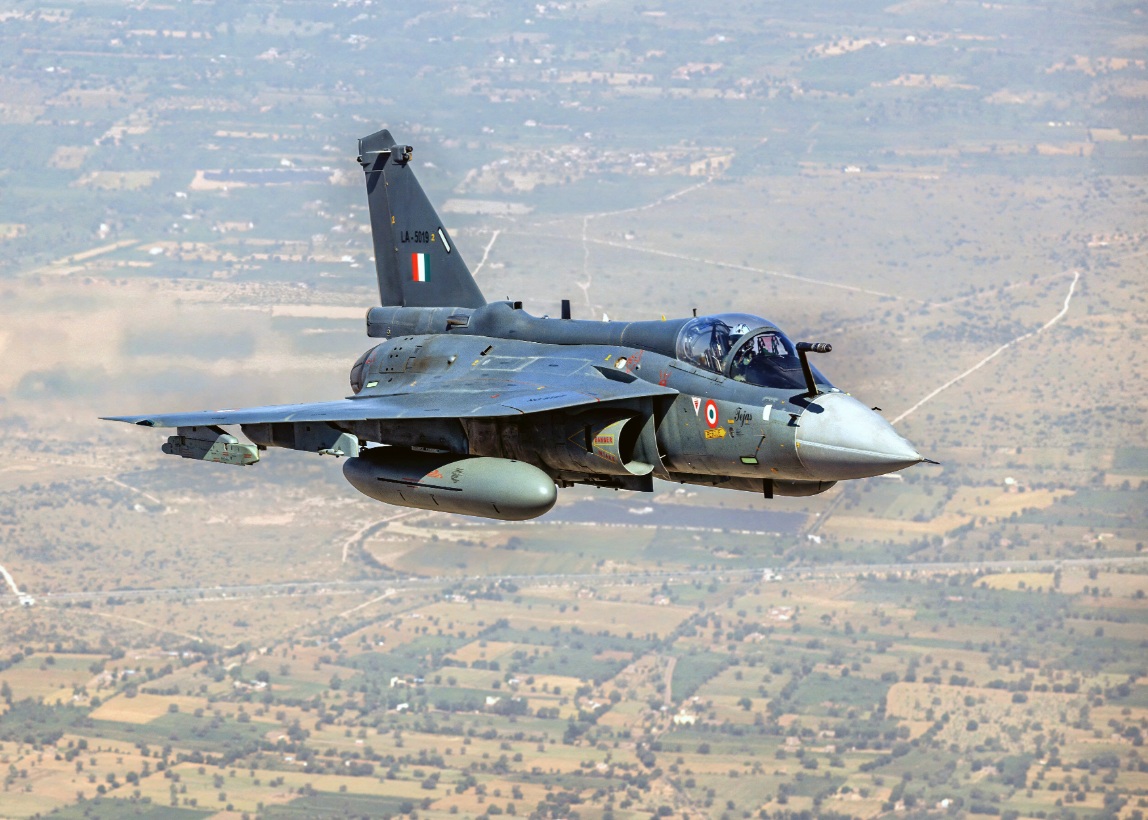
The emerging fleet mix would include the Tejas Mk-1A, Tejas Mk-2, MRFA and other indigenous platforms, he said. On the delayed induction of Tejas Mk-1A fighters, Singh acknowledged that the slippage had been longer than expected and said the IAF was also looking towards the Mk-2 variant to address capability gaps. "It happens that you plan something, but things get delayed. But this time, the delay has been much. We are also looking towards Mark 2. All these will be able to fill in the gaps that exist," he said. He also indicated that the IAF may have to consider another fighter platform if the AMCA programme encounters prolonged delays.
"Russia has offered us Su-57 jets, but no decision has been made on it," Singh said. The Air Chief also underlined the need to prioritise indigenous aircraft programmes, noting that multiple projects were progressing simultaneously. "There is a little worry which even I have and I have voiced this opinion that we need to make sure that we give the correct prioritisation to these programmes," he said. "There is a requirement to reduce the number of programmes which are going on at any time, no doubt," he said.
Singh said the development of an indigenous fighter engine remained an important requirement for India's future aerospace programmes. "The engine programme will give us at least one engine made in India, designed in India and made in India, which will give us a launch pad for you to get on to other programmes," he said. He also outlined progress on the Astra air-to-air missile programme, saying the Astra Mk-2 was midway through its research and development phase, while work on the Mk-3 had begun. "Astra is still in production. Mark 2 is midway through R&D and Mark 3 is in initial stages of R&D," Singh said.
The Air Chief linked the modernisation of the fighter fleet with the wider transformation of the IAF, which is increasingly focusing on network-centric warfare, artificial intelligence, unmanned systems and space-based capabilities. He said the changing nature of warfare required fighters, drones, loitering munitions, precision weapons, air defence systems, satellites, sensors and data networks to operate as an integrated combat architecture.
On artificial intelligence, Singh said the IAF was working towards an AI-augmented force in which technology would assist commanders while retaining human decision-making. "AI is entering into every field of the Indian Air Force today. But it is an AI-augmented force where AI assists but the human remains in the decision-making chain," he pointed. He also ruled out the need for a separate drone force, saying unmanned platforms would increasingly form part of the existing force structure.
"Drones are not revolutionary for Indian Air Force. Yes, they are evolutionary," he said. On space capabilities, Singh said the IAF was working towards enhancing space situational awareness and using satellites to support communications and ISR. "We are working towards the programmes in which new satellites are being sent. So, what we are doing now is mostly towards space situational awareness and use of space as an aid to our communication, aid to our ISR and support towards our main operations," he said.
He also said the possibility of weaponisation of space was being examined, though the work remained at the research and development stage. "Finally, weaponization of space which is a possibility and which may be already happening in some areas. We already are aware of that. But that work is at the moment in R&D stage," he added.
UNI PWS SS


