


Derek O'Brien questions government's approach to Winter Session, renews call for 100 sitting days
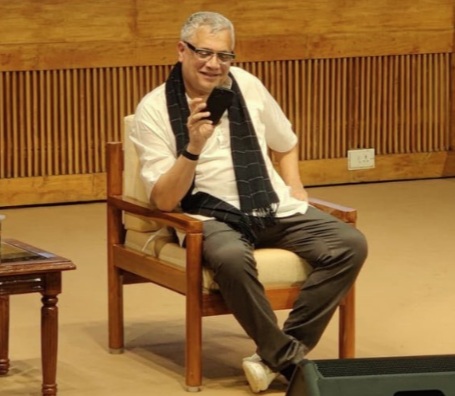
New Delhi, Nov 23 (UNI) Trinamool Congress leader and Rajya Sabha member Derek O'Brien has questioned the BJP-led government's approach to Parliament's Winter Session, accusing it of treating the crucial legislative exercise as an optional engagement and renewing his demand for a fixed parliamentary calendar with a minimum of 100 sitting days annually.
"Why is a skittish BJP treating the Winter Session like an optional engagement?" O'Brien asked in a post shared with the media, reigniting the debate over the functioning of Parliament and the need to provide adequate time for legislative business, meaningful debates and scrutiny of government decisions. Recalling his earlier legislative initiative, O'Brien said he had introduced a Private Member's Bill nearly two years ago proposing that Parliament should meet for at least 100 days every year and follow a predetermined calendar.
"I proposed that Parliament sits for at least 100 days in one year and we have a fixed parliamentary calendar. With this objective, I introduced a Private Member's Bill almost two years ago," he said. His intervention has brought renewed attention to the longstanding demand for institutionalising a parliamentary calendar, rather than allowing the duration and timing of sessions to remain largely dependent on executive decisions and prevailing political circumstances. Parliament traditionally meets in three sessions annually - the Budget Session, the Monsoon Session and the Winter Session - but the number of sitting days has fluctuated considerably over the years.
Opposition parties have repeatedly argued that shrinking parliamentary sittings undermine legislative scrutiny, limit opportunities to raise public concerns and weaken the legislature's ability to hold the executive accountable. O'Brien's demand for a guaranteed minimum of 100 sitting days is aimed at ensuring greater predictability and continuity in parliamentary functioning, besides providing MPs sufficient opportunities to deliberate on important national issues and examine legislation in detail. His remarks assume particular significance against the backdrop of the unprecedented delay in formally concluding the Monsoon Session.
Although both the Lok Sabha and the Rajya Sabha were adjourned sine die on August 13, the session has remained technically open for more than 100 days in the absence of a formal prorogation order. Under parliamentary procedure, adjournment sine die suspends the sittings indefinitely, whereas prorogation formally brings a session to an end. Article 85 of the Constitution stipulates that no more than six months can elapse between two sessions of Parliament. The government's decision not to prorogue the Monsoon Session has triggered questions from Opposition parties, including the Congress, Trinamool Congress and Samajwadi Party, which suspect that the extended procedural arrangement is intended to facilitate the recall of Parliament at short notice for consideration of a proposed Constitutional Amendment Bill on delimitation.
The proposed legislation is understood to seek a fresh delimitation exercise and an increase in the maximum strength of the Lok Sabha to 850 members, with significant implications for the implementation of the 33 per cent reservation for women in legislatures. Congress leaders, including party general secretary in-charge communications Jairam Ramesh, have alleged that the government is keeping the Monsoon Session technically alive while attempting to muster the two-thirds majority required to pass the proposed constitutional amendment. An earlier version of the legislation was defeated in April 2026.
The Opposition has also accused the government of avoiding parliamentary scrutiny of contentious issues, including its demand for the resignation of the Chief Election Commissioner. The prolonged uncertainty over the conclusion of the Monsoon Session has, meanwhile, raised questions about the government's plans for the traditional Winter Session. Reports suggest that the government may reconvene the existing Monsoon Session in the second week of December for approximately 12 sittings instead of convening a separate Winter Session. Such an arrangement would allow it to use the provision for recalling an already-adjourned session at short notice, potentially bringing the revised delimitation legislation before Parliament.
O'Brien's intervention thus goes beyond the immediate controversy surrounding the Winter Session. It raises a larger institutional question: whether Parliament should function according to a predictable annual legislative calendar, with guaranteed minimum sitting days, or continue to depend on a schedule whose timing and duration are largely determined by the government of the day.
UNI SKA AAB


