


Bihar Cabinet clears Green Hydrogen Policy 2026, approves Rs 2,761.55-crore farm feeder solarisation plan
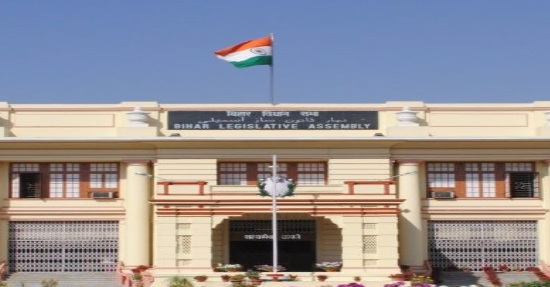
Patna, Sep 30 (UNI) The Bihar Cabinet on Wednesday approved the draft Bihar Green Hydrogen Policy, 2026, aimed at promoting renewable energy, attracting private investment in the green hydrogen sector, reducing dependence on imported natural gas and cutting carbon emissions.
The cabinet gave the gubernatorial sanction to the draft in the meeting held under the leadership of Chief Minister Samrat Choudhary. The policy is also intended to create employment opportunities in the emerging green hydrogen ecosystem. The Chief Minister had reviewed the draft policy earlier this month, with officials presenting a roadmap for developing a green hydrogen economy in the state. The Cabinet also approved a major Rs 2,761.55-crore grant package for solarisation of the remaining 2,554 agricultural feeders, involving installation of solar power plants with a combined capacity of 2,585 MW. Of the total, Rs 2,714.25 crore will be provided as a grant at the rate of Rs 1.05 crore per MW, while Rs 47.30 crore will be given as an incentive to gram panchayats associated with implementation at 946 power substations.
The Cabinet approved the Mukhyamantri Haemophilia Yojana under the Chief Minister's Medical Assistance Fund for improved treatment of haemophilia patients. An administrative sanction of Rs 26.33 crore for the first year was approved for the procurement of Emicizumab, a non-factor medicine. For strengthening law and order and dealing with crowd-control and emergency situations, the government approved the procurement of 30 water cannons and 86 Vajra vehicles at a total estimated cost of Rs 62.52 crore.
The vehicles are intended for deployment during festivals, fairs, rallies, VIP movements, land disputes, student protests, road accidents and other sensitive situations. The Cabinet approved a revised project cost of Rs 351.85 crore under the Revamped Distribution Sector Scheme (RDSS) for grid electrification of 21,644 households in 177 habitations across Kaimur and Rohtas districts under the South Bihar Power Distribution Company area.
It also approved a Rs 477-crore advance from the Bihar Contingency Fund for payment of honorariums to Anganwadi workers and helpers, as well as statistical assistants, women supervisors, data-entry operators and other personnel under the ICDS establishment. Several road projects also received administrative approval, including the Tarapur bypass road in Munger district- Rs 115.90 crore for the 7-km stretch from Banshipur on SH-22 to Bihma via Dhobai, Gogachak, Teldiha temple and Mohanganj, Rangaon-Bhaglapura-Dhauni bypass- Rs 87.63 crore under Saat Nischay-2. Mithapur-Mahuli elevated road connectivity-Rs 82.26 crore for a two-lane down ramp and a two-lane at-grade road along the Parsa-Sampatchak alignment. NH-333 in Munger- Rs 51.22 crore for widening and strengthening the Gangta forest stretch from single lane to two lanes.
The Cabinet also approved a framework for issuing no-objection certificates for laying utility infrastructure-including electricity, water, telephone/cable, optical fibre, sewer and gas pipelines-on roads and land owned by the Road Construction Department. The cabinet approved the second-stage financial sanction under the Bihar Tourism Policy 2023 and Guidelines 2024 for the proposed Hotel Taj City Centre, Patna, based on a project cost of about Rs 213.42 crore. For urban development, the Bihar State Housing Board was authorised to enter into MoUs with NBCC (India) Ltd for self-financed redevelopment of its dilapidated residential colony in Bahadurpur Sector-6, Patna, and for a self-financed project on an 8.5-acre plot in Bahadurpur Sector-5.
The Cabinet further approved leasing two separate two-acre plots in the Sabalpur Diara and Dujra Diara areas of Patna to the Inland Waterways Authority of India for development of world-class cruise terminals, for an initial period of 25 years with a renewal option. The Cabinet approved the creation of 34 posts each for the administrative functioning of the proposed Dr Shyama Prasad Mukherjee Artificial Intelligence and Computer Science University and Shaheed Jubba Sahni University of Architecture and Civil Engineering. Under Saat Nischay-3, approval was also given for the continuation of 871 existing operators of the Kushal Yuva Programme (Digital Mitra) under the prescribed selection and operating procedure. The cabinet also approved the recruitment of 35 contractual personnel for the smooth functioning of the Buddha Samyak Darshan Museum-cum-Memorial Stupa at Vaishali, the Directorate of Museums and state museums. For long-term development of Bihar's aviation sector, the government approved engaging KPMG India Services LLP as a consultant for the preparation of an Aviation Vision and Policy, at a service fee of Rs 86.17 lakh plus applicable taxes.
The Cabinet also approved reducing VAT on aviation turbine fuel (ATF) from 1 per cent to zero at the state's RCS-subsidised airports under the revised UDAN scheme. In another financial-administrative reform, the Bihar Financial Rules, 1950, will be amended to permit departments and procurement units to use the Forward Auction Module on the GeM portal for auctioning eligible items. The Cabinet also approved the implementation of recommendations contained in the Seventh State Finance Commission''s interim report for financial years 2026-27 and 2027-28, besides approving the restructuring of the Resident Commissioner's Office in New Delhi and the Bihar Bhawan office.
UNI RS RSA


