


India embraces market risk, but long-term retirement saving still lags: CEA
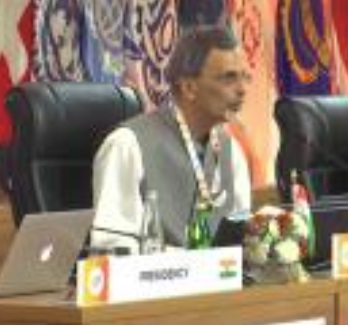
New Delhi, Oct 1 (UNI) India's growing participation in equities and mutual funds has not been matched by a similar rise in long-term retirement savings, Chief Economic Adviser V Anantha Nageswaran said, highlighting the need for households to move beyond short-term saving habits as the country's population ages.
Speaking at the Pension Fund Regulatory and Development Authority's (PFRDA) NPS Divas 2026 on Thursday, Nageswaran said Indian savers were increasingly willing to take market-linked risks, but had yet to commit a larger share of their savings for longer periods. "The Indian saver has shown a willingness to accept market risk-or so we would like to believe," Nageswaran said. However, he added that committing money for a longer tenure represented a different financial decision, noting that Indians generally tend to focus less on long-term financial planning.
The shift in household financial savings towards market-linked instruments has been significant in recent years. According to the Economic Survey 2025-26, equities and mutual funds accounted for about 12-15 per cent of annual household financial savings in FY25, up from around 2 per cent in FY12. At the same time, the proportion of savings parked in bank deposits fell from more than 58 per cent in FY12 to around 35 per cent in FY25. Systematic investment plan (SIP) contributions have also expanded sharply.
Monthly SIP inflows, which were below Rs 4,000 crore in FY17, crossed Rs 28,000 crore during the first eight months of FY26. Despite this growing participation in financial markets, pension and insurance assets have not seen a comparable increase in their share of household savings. Nageswaran said their share remained broadly unchanged between FY19 and FY24. India's pension assets currently stand at around 17 per cent of GDP, significantly below the levels seen across OECD economies, where pension assets are at least 80 per cent of GDP. The CEA said the changing demographic profile of the country made building adequate retirement savings increasingly important.
As the number of elderly people rises, households will need to accumulate financial resources over longer periods, while financial markets will also have to direct these funds towards productive long-term investments. Financial Services Secretary Sanjay Lohiya, speaking at the same event, said expanding pension coverage would also require greater confidence among subscribers in the pension system. He emphasised that retirement savings should be viewed differently from conventional investment products because their primary objective is to provide financial support after an individual stops working. Lohiya also said contribution-based pension schemes should explore ways to provide subscribers with greater flexibility.
Mechanisms that remind subscribers to make regular contributions could also help improve participation and continuity of savings, he added. Nageswaran pointed to India's demographic transition as another reason for strengthening retirement planning. Citing the United Nations Population Fund's India Ageing Report 2023, he said the proportion of Indians aged 60 years and above stood at 10.1 per cent in 2021 and is projected to reach 15 per cent by 2036 and 28 per cent by 2050. That would translate into around 34.7 crore Indians aged 60 and above by 2050, underscoring the scale of the retirement-savings challenge.
Life expectancy after retirement is also significant. According to Sample Registration System data cited by Nageswaran, a person reaching the age of 60 can currently expect to live for another 18.4 years on average. For women, the corresponding figure is 19.6 years. The demographic shift, therefore, is likely to make the ability of households to build and preserve savings over several decades increasingly important, even as Indian investors become more comfortable with market-linked financial products.
UNI VK RSA


